Menu

Tankless Water Heater Services in Washington, D.C. – Expert Installation, Repair, and Maintenance for Endless Hot Water

Get professional tankless water heater services from certified technicians who understand D.C.'s hard water challenges and building code requirements for both historic rowhouses and modern high-rise installations.

Slider Image 1
Slider Image 2
Slider Image 3
Slider Image 4
Slider Image 5
Slider Image 7
Slider Image 8
Slider Image 9
Slider Image 10
Slider Image 11

Why D.C. Homes and Businesses Are Switching to On-Demand Water Heaters

Washington, D.C.'s hard water creates constant headaches for traditional tank water heaters. The high mineral content from the Potomac River watershed causes sediment buildup that kills conventional units years before their expected lifespan. You are paying for water you heat twice because your tank bleeds energy 24 hours a day, even when you are asleep.

Space is expensive in D.C. A traditional 50-gallon tank takes up valuable square footage in your Capitol Hill rowhouse basement or Shaw condo utility closet. Tankless water heater installation eliminates that footprint. The unit mounts on your wall, freeing up room you can actually use.

Georgetown and Dupont Circle buildings face unique challenges. The freeze-thaw cycles along the Potomac corridor stress outdoor equipment. Your instant water heater needs proper placement and freeze protection, or you will face a cracked heat exchanger during the next polar vortex.

Commercial buildings in NoMa and Navy Yard deal with demand spikes that tank systems cannot handle. When 200 residents wake up at 6 AM, traditional water heaters run dry. On-demand water heater services solve this with continuous flow capacity sized to your actual usage patterns.

D.C.'s Victorian and Federal-style architecture adds complexity. Retrofitting tankless systems into 100-year-old plumbing and gas lines requires knowledge of both modern equipment and historic building constraints. The wrong installer will crack your cast iron drain lines or undersize your gas supply, leaving you with lukewarm showers and repair bills.

Crestline Plumbing Washington DC handles tankless water heater maintenance on all major brands, from Rinnai and Navien to Rheem and Noritz. We understand the difference between condensing and non-condensing units, and which works best for your building's venting situation.

Why D.C. Homes and Businesses Are Switching to On-Demand Water Heaters
How Professional Tankless Water Heater Repair and Installation Works

How Professional Tankless Water Heater Repair and Installation Works

Proper tankless water heater services start with load calculation. We measure your fixture count, calculate simultaneous demand, and factor in D.C.'s incoming water temperature, which drops to 42 degrees in January. A unit sized for summer will fail you in winter when groundwater runs cold.

Gas line sizing makes or breaks your installation. Most D.C. rowhouses have half-inch gas lines that cannot support a whole-house tankless unit. We calculate BTU requirements, measure your gas meter capacity, and upgrade your supply line to three-quarter inch or one inch when needed. Skipping this step results in a unit that shuts down mid-shower because it cannot pull enough fuel.

Venting must meet D.C. building code. Condensing tankless units produce acidic condensate that requires PVC venting and a neutralization system. Non-condensing units need Category III stainless steel venting. We pull permits for all installations because improperly vented combustion appliances kill people through carbon monoxide poisoning.

Water quality directly affects longevity. D.C.'s water hardness averages 150-200 ppm. Without annual descaling service, mineral deposits clog your heat exchanger within three years. Our tankless water heater maintenance includes vinegar flush cycles that dissolve calcium buildup before it chokes your flow rate.

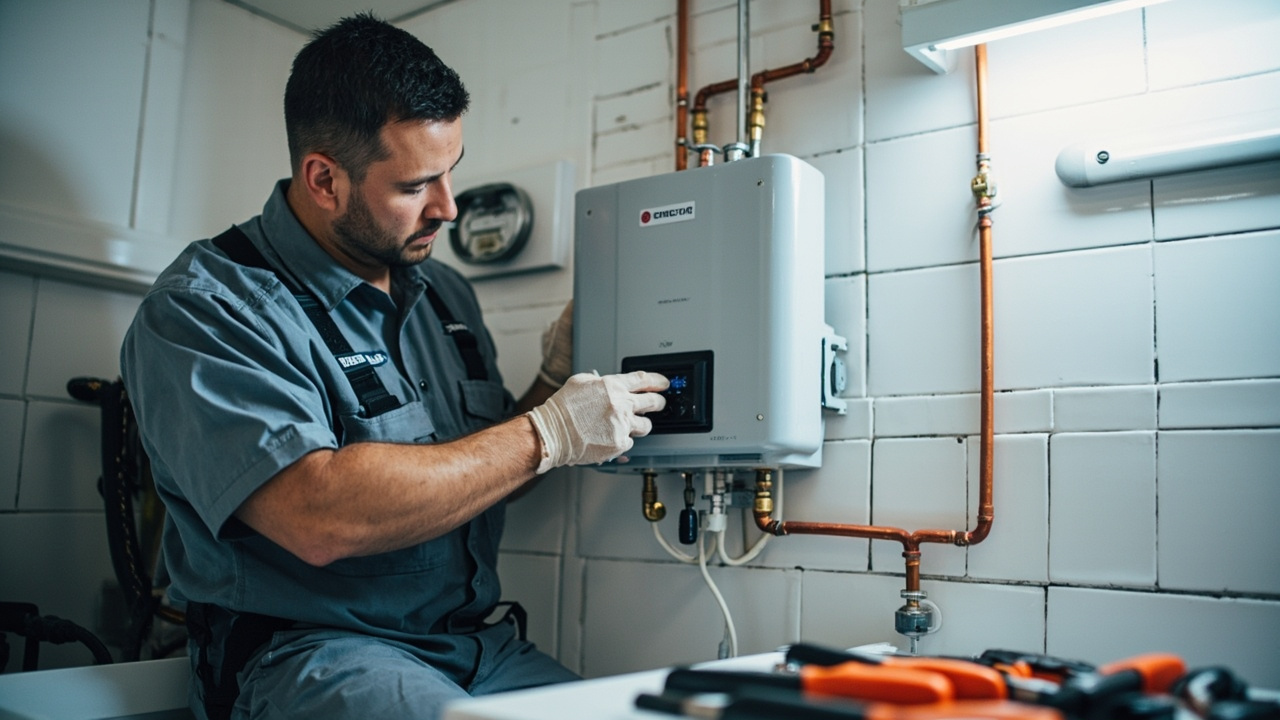
Tankless water heater repair requires diagnostic equipment. When your unit throws an error code, we test flame sensors, flow sensors, thermistors, and gas valves. Most service calls result from simple fixes like cleaning the inlet filter screen, but some require heat exchanger replacement, which costs less than full unit replacement when caught early.

We test temperature rise at every fixture. Your unit might heat water fine at the kitchen sink but fail at the third-floor bathroom because of pressure drop and distance. Proper commissioning includes adjusting flow rates and setting priority loops so you get consistent hot water everywhere.

What Happens During Your Tankless Service Appointment

Tankless Water Heater Services in Washington, D.C. – Expert Installation, Repair, and Maintenance for Endless Hot Water
01

System Assessment and Diagnostics

We test your incoming water pressure, temperature, and flow rate at multiple fixtures. You get a full diagnostic scan of error codes, ignition sequence timing, and flame quality. We measure your gas supply pressure and check for voltage drops that cause ignition failures. This tells us exactly what is wrong and what parts you need before we open our truck.
02

Repair or Installation Work

For repairs, we replace failed components like ignitors, flame rods, or heat exchangers. For new installations, we mount your unit, run new gas and water lines, install shutoff valves and drain points, and connect proper venting. Everything gets pressure tested before we turn on the gas. You watch the first test fire to confirm your hot water works before we leave.
03

Calibration and Client Training

We adjust your temperature settings, program priority modes if you have recirculation, and calibrate the altitude compensation for D.C.'s 410-foot elevation. You learn how to reset error codes, where to shut off water and gas in emergencies, and how to drain your unit before winter vacations. We leave you with the manufacturer documentation and our service contact for future maintenance calls.

Why D.C. Property Owners Trust Local Tankless Water Heater Experts

Washington, D.C. enforces strict plumbing codes through DCRA inspections. Your tankless installation needs permits for gas work, and the inspector will red-tag unpermitted installations. Crestline Plumbing Washington DC pulls the correct permits, schedules inspections, and ensures your work passes the first time. Out-of-town installers often skip this step, leaving you liable for fines and forced removal.

Historic preservation rules add another layer. If you own property in a designated historic district, your exterior venting must meet Heritage Preservation Office guidelines. We design vent terminations that satisfy both safety codes and aesthetic requirements, so you avoid violations and neighbor complaints.

D.C.'s water chemistry varies by neighborhood. Areas near Rock Creek pull different source water than neighborhoods east of the Anacostia River. We adjust our descaling service intervals based on your specific water hardness levels, not generic national averages that leave you under-protected.

Commercial buildings face ADA compliance for hot water delivery. Your tankless system must provide code-required temperatures at accessible fixtures within specific time limits. We design systems that meet D.C.'s commercial plumbing standards for schools, restaurants, medical offices, and multi-family housing.

Emergency tankless water heater repair gets priority response. When your building loses hot water in January, you need someone who answers the phone and stocks parts locally. We maintain inventory for common tankless components, so most repairs finish same-day instead of waiting for parts shipments.

Our technicians train on specific brands. A Navien tankless unit uses different error codes and maintenance procedures than a Rinnai. We do not send generalists who guess at diagnostics. You get technicians who work on your specific model weekly and know its failure patterns.

Warranty compliance matters. Many manufacturers void warranties if unlicensed contractors perform installation or maintenance. Our licensed plumbers document all work, so your warranty stays intact when you need a claim processed.

What to Expect From Professional Tankless Water Heater Services

Fast Response and Flexible Scheduling

Standard installations take four to six hours for straightforward replacements, longer for first-time tankless conversions that need gas line upgrades. We schedule around your availability, including evenings and weekends for residential clients. Commercial projects happen during off-hours to avoid disrupting your business operations. Emergency repairs get same-day dispatch when you have no hot water. We arrive with diagnostic tools and common replacement parts, so most service calls resolve in one visit instead of requiring return trips.

Thorough Initial Evaluation

Your consultation includes measuring your peak hot water demand based on fixture count and usage patterns. We evaluate your existing gas meter capacity, electrical service for powered venting, and available mounting locations that meet clearance codes. You receive a written estimate that itemizes equipment, labor, permit fees, and any required upgrades like gas line upsizing or electrical circuits. We explain the difference between condensing and non-condensing models, so you choose the right technology for your budget and venting constraints. No pressure, just facts about what works in your building.

Reliable Performance and Efficiency

A properly installed tankless water heater delivers endless hot water at your set temperature, with no wait time after the initial pipe purge. You see lower gas bills because the unit only heats water on demand instead of maintaining a tank 24 hours daily. Water runs clear and clean because fresh water flows through the heat exchanger instead of sitting in a rust-prone tank. Your temperature stays consistent even when multiple fixtures run simultaneously, assuming we sized your unit correctly. The installation looks professional, with straight pipe runs, proper support brackets, and clean vent terminations that match your building exterior.

Ongoing Maintenance and Support

Annual descaling service extends your unit's lifespan and maintains efficiency. We flush your heat exchanger with food-grade vinegar solution to remove mineral deposits that reduce flow and cause overheating shutdowns. You receive reminder calls when your next maintenance comes due based on your water hardness and usage patterns. Manufacturer warranties typically cover parts for five to ten years, and we handle warranty claims on your behalf when covered components fail. Our service records document all maintenance, which manufacturers require to honor warranty coverage. You get a local phone number that connects you to our dispatch, not an offshore call center.

Frequently Asked Questions

You Have Questions,
We Have Answers

Should tankless water heaters be serviced? +

Yes. Tankless water heaters need annual servicing to maintain efficiency and prevent breakdowns. Washington, D.C.'s hard water causes mineral buildup inside the heat exchanger, which reduces performance and can lead to costly failures. A professional descaling flush removes calcium and lime deposits. You should also have a plumber inspect the air intake filter, check gas connections, and verify proper venting. Skip maintenance, and you risk voiding your manufacturer warranty. Regular service extends your unit's lifespan, keeps energy bills low, and ensures you have hot water when you need it most.

What is the average cost to service a tankless water heater? +

Annual tankless water heater service in Washington, D.C. typically involves descaling, filter cleaning, and safety inspections. Cost factors include your unit's size, accessibility, and mineral buildup severity. Homes in D.C. neighborhoods with hard water require more intensive descaling. The process takes one to two hours. Skipping yearly maintenance leads to efficiency loss, higher gas bills, and premature failure. Regular service protects your investment and keeps your warranty valid. Expect to pay more if your unit has not been flushed in several years or requires parts replacement.

What is the most common issue with tankless water heaters? +

Mineral scale buildup is the most common issue with tankless water heaters in Washington, D.C. Hard water flowing through the D.C. municipal system deposits calcium and lime inside the heat exchanger. This restricts water flow, reduces heating efficiency, and triggers error codes. You may notice fluctuating water temperatures or reduced flow at faucets. Scale buildup forces your unit to work harder, increasing energy costs. Annual descaling prevents this problem. If you ignore it, the heat exchanger can fail completely, requiring expensive replacement. A water softener reduces mineral deposits.

How much does a plumber charge to put in a tankless water heater? +

Installation costs vary based on your existing setup, fuel type, and venting requirements. Converting from a traditional tank to tankless often requires gas line upgrades, new venting, and electrical work for the unit's control panel. Older D.C. rowhouses may need additional modifications to meet current code. Proper sizing matters. An undersized unit will not deliver enough hot water during peak demand. Oversized units waste energy. A qualified plumber evaluates your household's hot water needs, existing infrastructure, and local code requirements before providing an accurate quote. Permits add to the total cost.

What is the lifespan of a tankless water heater? +

A properly maintained tankless water heater lasts 15 to 20 years, significantly longer than traditional tank heaters. Lifespan depends on water quality, usage patterns, and maintenance frequency. Washington, D.C.'s hard water accelerates wear if you skip annual descaling. High-quality units with stainless steel heat exchangers outlast cheaper models. Regular professional maintenance removes corrosive mineral deposits and identifies worn components before they fail. Neglect maintenance, and you may get only 10 years. A well-maintained tankless unit provides hot water efficiently for two decades, making it a solid investment for D.C. homeowners.

What happens if I don't flush my tankless water heater? +

Skipping annual flushing allows mineral scale to accumulate inside your tankless water heater's heat exchanger. In Washington, D.C., hard water deposits calcium and lime that restrict water flow and reduce heating efficiency. You will notice inconsistent water temperatures, longer wait times for hot water, and higher gas bills. Scale buildup forces components to overheat, triggering safety shutdowns and error codes. Eventually, the heat exchanger corrodes and fails, requiring expensive replacement. You also void most manufacturer warranties by neglecting required maintenance. Flushing takes one hour and prevents thousands in repair costs.

How D.C.'s Hard Water and Historic Buildings Affect Tankless Water Heater Longevity

Washington, D.C. water comes primarily from the Potomac River, with hardness levels between 150 and 200 parts per million depending on your location. This mineral content creates scale buildup inside tankless heat exchangers faster than in softer water regions. Without annual descaling through professional tankless water heater maintenance, your unit loses efficiency within two years and fails completely by year four. The tight copper tubing inside heat exchangers cannot tolerate the calcium and magnesium deposits that D.C. water leaves behind. Properties east of Rock Creek Park and south of the Anacostia River often see harder water than Northwest neighborhoods, requiring more frequent service intervals.

Historic rowhouses in Capitol Hill, Georgetown, and Logan Circle present installation challenges that generic contractors miss. These buildings have gas lines sized for old atmospheric water heaters that pulled 40,000 BTU. Modern tankless units need 180,000 to 200,000 BTU for whole-house service. Your gas meter and supply line must upgrade, or the unit will starve for fuel and shut down. Basement ceiling heights often fall below code clearances for venting, requiring creative routing through existing chimneys or exterior wall penetrations that meet historic preservation guidelines. Crestline Plumbing Washington DC navigates these constraints daily because we work exclusively in D.C. and understand both modern equipment requirements and century-old building realities.
Plumbing Services in The Washington DC Area

Our service area is conveniently located to provide fast and efficient plumbing solutions to residents and businesses throughout the Washington DC area. We are dedicated to ensuring that no matter where you are, a trusted and reliable plumber is just a call away. Our map provides a visual representation of our service coverage, helping you to quickly and easily locate our trusted team.

Address:
Crestline Plumbing Washington DC, 1140 3rd St NE, Washington, DC, 20002

Additional Services We Offer

Our news updates

Latest Articles & News from The Blogs

Deciding Between a Tankless or Storage Tank Water Heater for Your Growing Family in Fort Davis Choosing the right water…

Deciding Between a Tankless or Storage Tank Water Heater for Your Growing Family in Fort Davis

Deciding Between a Tankless or Storage Tank Water Heater for Your Growing Family in Fort Davis Choosing the right water…

The Challenges of Adding a Sink to Your Kitchen Island in a Brentwood Rowhome

The Challenges of Adding a Sink to Your Kitchen Island in a Brentwood Rowhome Adding a sink to your kitchen…

How to Choose Between a Vertical and Horizontal Grease Interceptor for Your Navy Yard Restaurant

How to Choose Between a Vertical and Horizontal Grease Interceptor for Your Navy Yard Restaurant Running a restaurant in Navy…

Contact Us

Stop paying for reheated water and wasted space. Call Crestline Plumbing Washington DC at (771) 223-8111 for professional tankless water heater installation, repair, and maintenance. We answer calls seven days a week and dispatch technicians who know D.C. building codes and water conditions.