
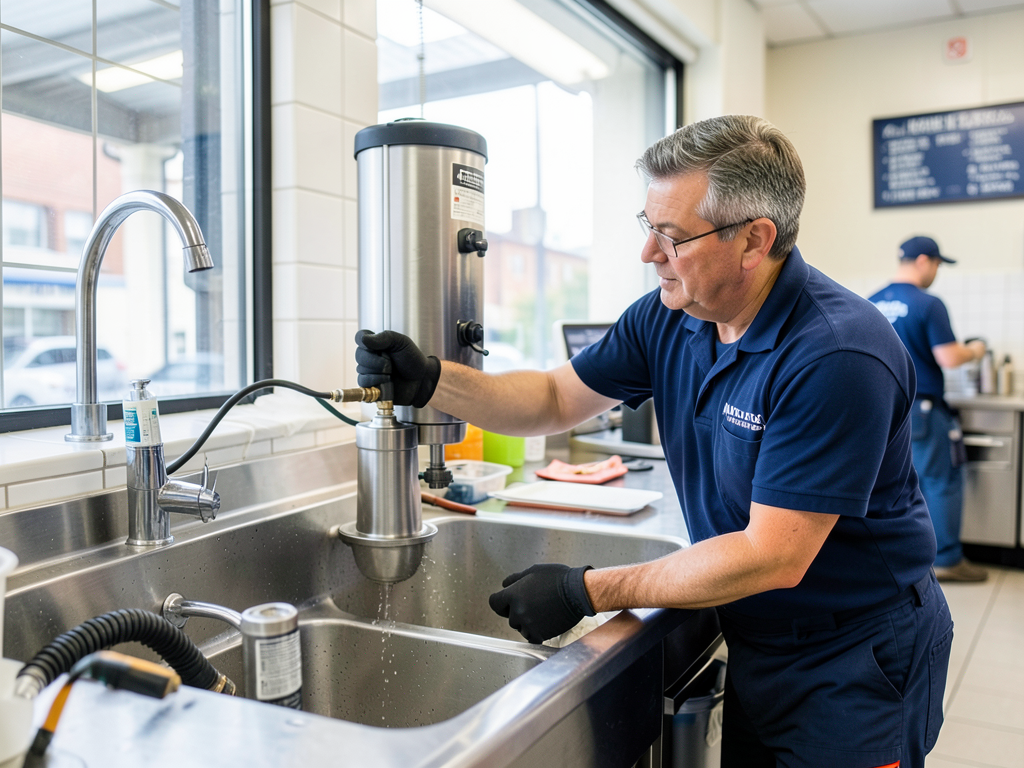
How to Choose Between a Vertical and Horizontal Grease Interceptor for Your Navy Yard Restaurant
Running a restaurant in Navy Yard means dealing with fats, oils, and grease (FOG) every day. The wrong grease interceptor can clog your drains, violate DC Water regulations, and shut down your kitchen. The right one keeps your plumbing flowing, your kitchen compliant, and your business running smoothly. This guide breaks down the differences between vertical and horizontal grease interceptors so you can make the best choice for your space, your menu, and your budget. DC Water FOG Control Program.
Why Grease Interceptors Matter in Navy Yard Restaurants
Navy Yard sits along the Anacostia River, where DC Water enforces strict FOG control to protect local waterways. Restaurants here face higher scrutiny because of the area’s density and proximity to the river. A single FOG violation can trigger fines, mandatory shutdowns, and costly cleanups. That is why choosing the right interceptor is not just about plumbing—it is about protecting your business and the environment. Common Plumbing Problems in Historic Capitol Hill Rowhouses (and How We Fix Them).
Understanding Grease Interceptor Types
Before comparing vertical and horizontal models, it helps to know the two main categories of interceptors used in commercial kitchens. Hydromechanical grease interceptors (HGIs) are small, indoor units that use air entrainment and flow control to separate FOG. Gravity grease interceptors (GGIs) are large, outdoor tanks that rely on retention time to let FOG rise and separate from wastewater.. Read more about Choosing the Right Size Grease Interceptor for Your New Cafe in Edgewood.
Both vertical and horizontal models can be HGIs or GGIs. The orientation affects installation, maintenance, and space requirements. Vertical units stand upright, while horizontal units lie on their side. Each has strengths depending on your kitchen layout and FOG volume.. Read more about How to Install a Hair Interceptor for Your Home Salon or Pet Wash in Georgetown.
Vertical Grease Interceptors: Strengths and Weaknesses
Vertical interceptors work well in tight spaces. Their upright design fits under sinks, in utility closets, or in mechanical rooms where ceiling height is limited. They often have smaller footprints than horizontal units, making them ideal for compact Navy Yard kitchens where every square foot counts.
Installation is straightforward when space allows. The vertical orientation simplifies plumbing connections and reduces the need for custom brackets or supports. Maintenance is also easier because the unit sits at eye level, letting staff check grease levels without special tools.
However, vertical units can struggle with high FOG volumes. The upright design limits retention time, meaning less efficient separation for busy kitchens. If your menu includes deep frying or heavy sauce production, a vertical HGI might require more frequent pumping.
Horizontal Grease Interceptors: Strengths and Weaknesses
Horizontal interceptors excel at handling large FOG loads. Their elongated shape provides more retention time, allowing better separation of fats, oils, and grease from wastewater. This makes them ideal for high-volume kitchens, seafood restaurants, or operations with multiple fryers.
They also handle solids better. The horizontal flow path gives debris more time to settle before reaching the outlet, reducing clogs and extending service intervals. For restaurants near Nationals Park that see heavy game-day traffic, this reliability can prevent mid-service plumbing emergencies.
The trade-off is space. Horizontal units need longer floor space and may require custom installation to fit under counters or through doorways. They can also be harder to access for maintenance, sometimes needing special lifting equipment.. Read more about Why Your Floor Drains Keep Smelling and How a Trap Primer Solves it in Skyland.
Space and Installation Considerations for Navy Yard
Navy Yard restaurants often occupy renovated warehouses or new mixed-use buildings with unique layouts. Before choosing orientation, measure your available space carefully. Vertical units work best when ceiling height exceeds 36 inches and floor space is tight. Horizontal units need at least 48 inches of clear floor length but can fit under standard 36-inch counters. Choosing the Best Tankless Water Heater for Your Small Washington DC Condo.
Consider access for maintenance. Vertical units are easier to reach for routine checks, but horizontal units may need removable panels or hatches for cleaning. If your kitchen is on a second floor, factor in weight distribution and floor load ratings.
Also check local building codes. DC Water and the District of Columbia Department of Consumer and Regulatory Affairs (DCRA) require interceptors to meet specific sizing formulas based on your kitchen’s flow rate and FOG production. A licensed plumber can calculate the required gallons per minute (GPM) capacity and ensure compliance. DCRA Plumbing Permits.
Comparing Vertical vs. Horizontal: Quick Reference Table
| Feature | Vertical Interceptor | Horizontal Interceptor |
|---|---|---|
| Space Required | Tall, narrow footprint | Long, low footprint |
| Best For | Compact kitchens, low FOG volume | High-volume kitchens, heavy FOG |
| Maintenance Access | Easy, eye-level access | May need hatches or lifts |
| Retention Time | Shorter | Longer |
| Installation Complexity | Simpler | May need custom supports |
| Typical Cost (DC Metro) | $800-$2,500 | $1,500-$4,000 |
DC Water and DCRA Compliance Requirements
DC Water’s FOG Control Program requires all food service establishments to install and maintain grease interceptors that meet or exceed 50% FOG removal efficiency. The District of Columbia Plumbing Code, based on the International Plumbing Code (IPC), mandates specific sizing formulas. For HGIs, the formula is:
GPM = (Sink Drain Area x 1.5) + (Floor Drain Area x 1.0)
Gravity interceptors use a different calculation based on kitchen square footage and equipment types. DCRA also requires permits for installation and regular inspections. Navy Yard restaurants must keep maintenance logs and schedule pumping when interceptors reach 25% capacity.
Violations can result in fines up to $2,000 per day and mandatory corrective action plans. Working with a licensed DC plumber ensures your interceptor meets all codes before your first health inspection. Who to Call When You Need an Emergency Plumber in Georgetown Right Away.
Maintenance and Long-Term Performance
Both vertical and horizontal interceptors need regular cleaning to prevent FOG buildup. Vertical units are easier to monitor visually, so staff can spot issues early. Horizontal units may hide problems until they cause backups, making scheduled maintenance more critical.
Pumping frequency depends on your kitchen’s FOG output. A small café might pump every three months, while a busy sports bar near Nationals Park might need monthly service. Some restaurants install automated grease removal devices (GRDs) alongside interceptors for added protection.
GRDs use electric skimmers to remove FOG continuously, reducing manual labor and extending interceptor life. They cost more upfront but can save money on pumping and prevent emergency clogs. Emergency Sump Pump Failure.
Making the Right Choice for Your Navy Yard Restaurant
Start by evaluating your kitchen’s FOG production. Ask yourself:
- How many fryers, grills, and ovens do you operate?
- Do you serve fried foods, sauces, or dairy-heavy dishes?
- How many customers do you serve during peak hours?
- What is your available space for installation?
If you run a small café with limited space and light FOG output, a vertical HGI might be perfect. If you operate a high-volume restaurant with heavy frying, a horizontal GGI or HGI will handle the load better.
Consider future growth too. If you plan to expand your menu or hours, choose an interceptor with extra capacity to avoid costly upgrades later.
Professional Installation and Inspection
Installing a grease interceptor is not a DIY job. DC codes require licensed plumbers to handle connections to your building’s wastewater system. Improper installation can cause leaks, code violations, and expensive rework. Safely Installing New Gas Lines for Your DC Kitchen Remodel.
A professional installer will:
- Calculate your required interceptor size using DC Water formulas
- Ensure proper venting and backflow prevention
- Install flow control devices as required by code
- Coordinate with DCRA for permits and inspections
After installation, schedule a final inspection before opening. This protects you from surprise violations during health department visits.
Cost Considerations and ROI
Initial costs vary by size and type. Vertical HGIs start around $800 for small units and can exceed $2,500 for commercial-grade models. Horizontal units and GGIs range from $1,500 to $4,000 or more, depending on capacity.
Installation adds $500 to $2,000, depending on complexity. Factor in ongoing maintenance—pumping costs $150 to $400 per service, while GRDs add $100 to $300 monthly in electricity and maintenance.
The return on investment comes from avoiding fines, preventing kitchen shutdowns, and extending the life of your plumbing system. A properly sized interceptor can save thousands in emergency repairs and lost revenue.. Read more about Preventing Parking Lot Floods with Commercial Storm Drain Cleaning in Langdon.
Call (771) 223-8111 for Expert Grease Interceptor Installation
Choosing between vertical and horizontal grease interceptors affects your kitchen’s efficiency, compliance, and bottom line. Don’t guess—get expert advice from licensed DC plumbers who understand Navy Yard’s unique requirements. Call (771) 223-8111 today to schedule a site survey and ensure your restaurant stays compliant and clog-free.
Frequently Asked Questions
What size grease interceptor do I need for my Navy Yard restaurant?
The required size depends on your kitchen’s flow rate and FOG production. DC Water uses specific formulas based on your equipment and square footage. A licensed plumber can calculate the exact GPM capacity you need to meet code.
How often should I pump my grease interceptor?
Pump when the interceptor reaches 25% capacity or at least every three months for most restaurants. High-volume kitchens may need monthly service. Regular pumping prevents backups and keeps you compliant with DC regulations.
Can I install a grease interceptor myself to save money?
No. DC codes require licensed plumbers for grease interceptor installation. Improper installation can cause code violations, leaks, and expensive rework. Professional installation ensures compliance and protects your investment.
What happens if I don’t install a grease interceptor?
Without an interceptor, FOG enters your plumbing and the city sewer system, causing clogs and backups. DC Water can fine you up to $2,000 per day for violations. You also risk kitchen shutdowns and expensive emergency repairs.
Are there any local incentives for grease interceptor installation?</h?
DC Water offers educational resources and compliance assistance, but there are no direct financial incentives for installation. The cost savings come from avoiding fines and preventing plumbing emergencies that could shut down your business.
How do I know if my interceptor is working properly?
Signs of problems include slow drains, foul odors, or visible FOG in sink traps. Regular maintenance checks and keeping logs help you spot issues early. If you notice any problems, call a professional immediately to prevent bigger issues.
What’s the difference between an HGI and a GGI?
HGIs are smaller, indoor units that use air entrainment and flow control to separate FOG. GGIs are larger, outdoor tanks that rely on retention time for separation. HGIs work well for most restaurants, while GGIs handle higher volumes and are common in larger operations.
Final Thoughts
Choosing the right grease interceptor is one of the most important plumbing decisions for your Navy Yard restaurant. The wrong choice can lead to fines, kitchen shutdowns, and angry customers. The right choice keeps your business running smoothly and your plumbing protected.
Vertical interceptors save space and simplify maintenance for smaller operations. Horizontal interceptors handle heavy loads and provide better separation for busy kitchens. Consider your menu, volume, and available space carefully.
Most importantly, work with licensed DC plumbers who understand local codes and can ensure proper installation. Your interceptor is an investment in your restaurant’s future—make it count.
Ready to protect your kitchen and stay compliant? Call (771) 223-8111 today for professional grease interceptor installation and expert advice tailored to your Navy Yard restaurant’s needs.
{
“@context”: “https://schema.org”,
“@type”: “BlogPosting”,
“headline”: “How to Choose Between a Vertical and Horizontal Grease Interceptor for Your Navy Yard Restaurant”,
“description”: “Choosing the right grease interceptor for your Navy Yard restaurant? Learn the key differences between vertical and horizontal models, DC code requirements, and expert installation tips.”,
“wordCount”: 1853,
“datePublished”: “2026-05-02T08:21:00.000Z”,
“dateModified”: “2026-05-02T08:21:00.000Z”,
“inLanguage”: “en-US”,
“mainEntityOfPage”: {
“@type”: “WebPage”,
“@id”: “https://crestlineplumbingwashingtondc.com”
},
“publisher”: {
“@type”: “LocalBusiness”,
“name”: “Crestline Plumbing Washington DC”,
“url”: “https://crestlineplumbingwashingtondc.com”
},
“author”: {
“@type”: “Organization”,
“name”: “Crestline Plumbing Washington DC”,
“url”: “https://crestlineplumbingwashingtondc.com”
},
“image”: {
“@type”: “ImageObject”,
“url”: “https://crestlineplumbingwashingtondc.com/wp-content/uploads/2026/03/how-to-choose-between-a-vertical-and-horizontal-gr-1.png”
}
}
{
“@context”: “https://schema.org”,
“@type”: “Plumber”,
“name”: “Crestline Plumbing Washington DC”,
“url”: “https://crestlineplumbingwashingtondc.com”,
“address”: {
“@type”: “PostalAddress”,
“addressLocality”: “Washington DC”
},
“areaServed”: {
“@type”: “City”,
“name”: “Washington DC”
}
}
{
“@context”: “https://schema.org”,
“@type”: “FAQPage”,
“mainEntity”: [
{
“@type”: “Question”,
“name”: “What size grease interceptor do I need for my Navy Yard restaurant?”,
“acceptedAnswer”: {
“@type”: “Answer”,
“text”: “The required size depends on your kitchen’s flow rate and FOG production. DC Water uses specific formulas based on your equipment and square footage. A licensed plumber can calculate the exact GPM capacity you need to meet code.”
}
},
{
“@type”: “Question”,
“name”: “How often should I pump my grease interceptor?”,
“acceptedAnswer”: {
“@type”: “Answer”,
“text”: “Pump when the interceptor reaches 25% capacity or at least every three months for most restaurants. High-volume kitchens may need monthly service. Regular pumping prevents backups and keeps you compliant with DC regulations.”
}
},
{
“@type”: “Question”,
“name”: “Can I install a grease interceptor myself to save money?”,
“acceptedAnswer”: {
“@type”: “Answer”,
“text”: “No. DC codes require licensed plumbers for grease interceptor installation. Improper installation can cause code violations, leaks, and expensive rework. Professional installation ensures compliance and protects your investment.”
}
},
{
“@type”: “Question”,
“name”: “What happens if I don’t install a grease interceptor?”,
“acceptedAnswer”: {
“@type”: “Answer”,
“text”: “Without an interceptor, FOG enters your plumbing and the city sewer system, causing clogs and backups. DC Water can fine you up to $2,000 per day for violations. You also risk kitchen shutdowns and expensive emergency repairs.”
}
},
{
“@type”: “Question”,
“name”: “How do I know if my interceptor is working properly?”,
“acceptedAnswer”: {
“@type”: “Answer”,
“text”: “Signs of problems include slow drains, foul odors, or visible FOG in sink traps. Regular maintenance checks and keeping logs help you spot issues early. If you notice any problems, call a professional immediately to prevent bigger issues.”
}
},
{
“@type”: “Question”,
“name”: “What’s the difference between an HGI and a GGI?”,
“acceptedAnswer”: {
“@type”: “Answer”,
“text”: “HGIs are smaller, indoor units that use air entrainment and flow control to separate FOG. GGIs are larger, outdoor tanks that rely on retention time for separation. HGIs work well for most restaurants, while GGIs handle higher volumes and are common in larger operations.”
}
}
]
}
{
“@context”: “https://schema.org”,
“@type”: “BreadcrumbList”,
“itemListElement”: [
{
“@type”: “ListItem”,
“position”: 1,
“name”: “Home”,
“item”: “https://crestlineplumbingwashingtondc.com”
},
{
“@type”: “ListItem”,
“position”: 2,
“name”: “Blog”,
“item”: “https://crestlineplumbingwashingtondc.com/blog”
},
{
“@type”: “ListItem”,
“position”: 3,
“name”: “How to Choose Between a Vertical and Horizontal Grease Interceptor for Your Navy Yard Restaurant”
}
]
}
{
“@context”: “https://schema.org”,
“@type”: “Service”,
“serviceType”: “Plumbing”,
“provider”: {
“@type”: “LocalBusiness”,
“name”: “Crestline Plumbing Washington DC”,
“url”: “https://crestlineplumbingwashingtondc.com”
},
“areaServed”: {
“@type”: “City”,
“name”: “Washington DC”
},
“description”: “Choosing the right grease interceptor for your Navy Yard restaurant? Learn the key differences between vertical and horizontal models, DC code requirements, and expert installation tips.”
}