Menu

DIY vs. Professional Drain Cleaning in Washington, D.C. – Avoid Costly Mistakes and Pipe Damage with Expert Solutions

Before you reach for a chemical drain cleaner or rental snake, understand why DIY vs. professional drain cleaning methods produce drastically different results in D.C.'s aging infrastructure and what misguided attempts actually cost your plumbing system.

Slider Image 1
Slider Image 2
Slider Image 3
Slider Image 4
Slider Image 5
Slider Image 7
Slider Image 8
Slider Image 9
Slider Image 10
Slider Image 11

Why Washington, D.C. Homeowners Struggle with the DIY Drain Cleaning Decision

You are staring at a slow drain in your Georgetown row house or Capitol Hill condo, wondering if you should grab a bottle of commercial drain cleaner or call a plumber. This decision matters more in Washington, D.C. than most people realize.

The District's housing stock includes thousands of homes built between 1890 and 1940, many with original cast iron and galvanized steel drain lines. These aging pipes react poorly to the aggressive chemicals in store-bought drain cleaners. The acidic or alkaline formulas can accelerate corrosion in pipes already weakened by decades of use. What feels like a quick fix often becomes a catalyst for emergency pipe replacement.

Hiring a plumber vs DIY drain cleaning comes down to understanding what you are actually dealing with. A slow kitchen sink might signal a simple grease accumulation in the p-trap. Or it could indicate a collapsed section of your building's shared drain stack, common in older multi-unit buildings along 14th Street and Columbia Heights. You cannot diagnose the difference from the surface.

Professional drain service vs home remedies also differs in longevity. A plunger or hand-cranked auger might temporarily dislodge a hair clog in your bathroom sink. But if tree roots from the mature oaks lining Dupont Circle streets have infiltrated your sewer lateral, that surface-level approach leaves the core problem untouched. The clog returns within weeks.

Calling a plumber vs using drain cleaner protects your pipes and your investment. Chemical cleaners sit in the p-trap, eating away at pipe joints and seals. Professional hydro-jetting removes buildup without the corrosive aftermath. The question is not whether you can clear a drain yourself. The question is whether you can do it without causing hidden damage that costs you exponentially more later.

Why Washington, D.C. Homeowners Struggle with the DIY Drain Cleaning Decision
How Professional Drain Cleaning Differs from DIY Attempts

How Professional Drain Cleaning Differs from DIY Attempts

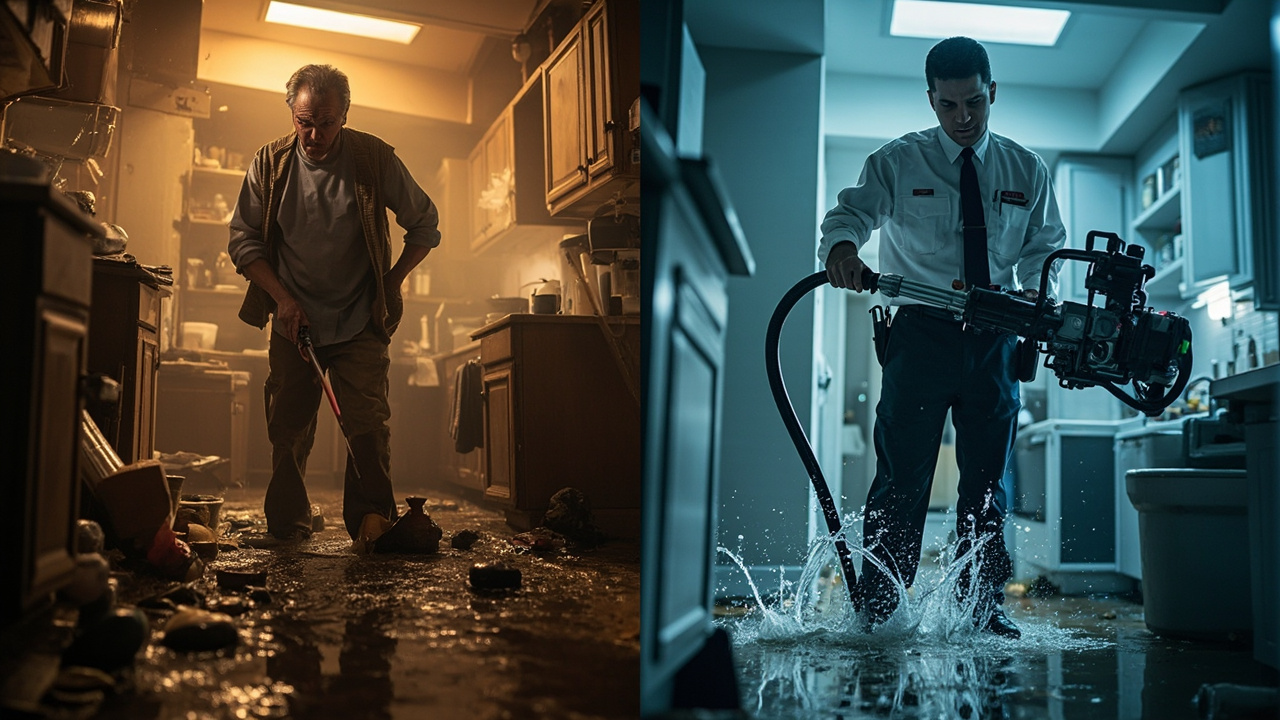
When you compare snaking a drain yourself vs hiring a pro, the tool itself is only part of the equation. A rental drain auger from a hardware store on Wisconsin Avenue gives you 25 feet of cable and basic instructions. A professional arrives with video inspection cameras, motorized sectional cable machines, and hydro-jetting equipment that delivers 3,000 to 4,000 PSI of targeted water pressure.

The diagnostic phase separates amateurs from experts. Before inserting any tool, a trained plumber evaluates your plumbing configuration. They identify whether you have a building trap, check for venting issues, and assess the pipe material. In D.C.'s row houses, shared drain stacks complicate the picture. Your second-floor bathroom might drain through your neighbor's wall cavity before reaching the building's main line. Clearing the wrong section wastes time and risks damaging pipes you do not own.

DIY clog removal vs expert drain services also differs in technique. Homeowners typically push a cable down the drain until they hit resistance, then crank the handle. This approach can punch through soft clogs like hair and soap buildup. But it often fails against grease accumulations, which require heat and emulsification to fully remove. It also risks puncturing old cast iron pipes or getting the cable stuck in pipe joints, a common problem in homes with offset connections from settling foundations.

Professional plumbers use sectional cable machines that allow controlled advancement through the line. They adjust torque and speed based on what the cable encounters. When they feel a blockage, they do not force through it. They assess whether it is a soft obstruction, hardened scale, or a collapsed pipe section. Video inspection confirms the diagnosis before aggressive clearing begins.

Hydro-jetting represents the clearest difference between professional and DIY approaches. This method uses high-pressure water streams to scour pipe walls clean, removing grease films, mineral deposits, and biofilm that hand-cranked cables leave behind. The result lasts years, not weeks. You cannot replicate this with consumer equipment.

What Happens When You Choose Professional Service

DIY vs. Professional Drain Cleaning in Washington, D.C. – Avoid Costly Mistakes and Pipe Damage with Expert Solutions
01

Initial Drain Assessment

A qualified plumber starts by asking specific questions about when the drain slows, whether multiple fixtures back up simultaneously, and if you hear gurgling sounds when water drains. This information reveals whether the blockage sits in a fixture trap, branch line, or main sewer. In multi-story D.C. row houses, this diagnostic conversation prevents wasted effort on the wrong drain section. The plumber then locates cleanout access points and evaluates your pipe configuration before selecting the appropriate clearing method.
02

Targeted Blockage Removal

After diagnosis, the plumber selects the correct tool for your specific obstruction. Soft clogs near the fixture might require only a closet auger or manual cable. Deeper blockages call for motorized sectional machines with cutting heads matched to your pipe diameter and material. For grease-heavy kitchen lines common in Adams Morgan restaurants and homes, hydro-jetting removes accumulated fats that cable machines leave behind. Video inspection confirms complete clearance and identifies any pipe damage requiring repair before you experience an emergency backup.
03

Prevention and Follow-Up

Professional service includes guidance on maintaining clear drains between service calls. Your plumber identifies contributing factors like inadequate venting, low-flow fixture issues, or structural problems affecting drainage. In older D.C. homes with galvanized steel drains, they recommend periodic hydro-jetting intervals to prevent scale accumulation. You receive documentation of what was found, photos from video inspection if performed, and realistic expectations for how long the repair should last based on your specific plumbing conditions.

Why D.C. Homeowners Trust Local Expertise Over DIY Methods

Washington, D.C. enforces strict plumbing codes through the Department of Consumer and Regulatory Affairs. These regulations exist because improper drain work creates public health hazards in our densely populated neighborhoods. When you hire Crestline Plumbing Washington DC, you work with professionals who understand DC Construction Code requirements for drain repairs, cleanout installations, and proper disposal of wastewater.

Local knowledge matters when dealing with D.C.'s unique infrastructure challenges. Our plumbers work daily in Capitol Hill row houses with shared drain stacks, Georgetown properties with 100-year-old terra cotta sewer laterals, and Navy Yard condos with modern PVC systems. This experience teaches us which clearing methods work for each pipe material and configuration. We know that aggressive cable work can shatter brittle cast iron pipes in Foggy Bottom basements. We recognize when root intrusion from the silver maples lining Meridian Hill requires hydro-jetting followed by trenchless pipe lining rather than repeated drain snaking.

The cost difference between DIY attempts and professional service shrinks when you factor in failed attempts. A homeowner who spends $75 on chemical drain cleaners and a rental snake, only to call a plumber anyway, has wasted money and time. Worse, the chemical damage to pipe joints often increases the final repair cost. Professional service completed correctly the first time eliminates this waste.

Trust also comes from proper equipment and training. Our technicians complete manufacturer training on Ridgid SeeSnake inspection cameras and General Pipe Cleaners' Sewerooter machines. We carry liability insurance that protects your property if something goes wrong during drain clearing. DIY work carries no such protection. If you damage a shared drain stack in your row house, you face liability to your neighbors for the resulting backup and water damage.

We also understand D.C.'s water chemistry. The Washington Aqueduct delivers moderately hard water that contributes to mineral scaling in drain lines over time. Our hydro-jetting services account for this, using appropriate pressure levels that remove scale without damaging older pipe materials.

What to Expect from Professional Drain Cleaning Service

Response Time and Availability

Emergency drain backups do not respect business hours. When sewage backs up into your basement during a weekend dinner party in your Tenleytown home, you need immediate help. Professional plumbing services maintain emergency dispatch systems that connect you with a qualified plumber within hours, not days. Standard service calls typically schedule within 24 to 48 hours based on technician availability and your schedule flexibility. The initial phone assessment determines urgency. A completely blocked toilet in a single-bathroom apartment receives priority over a slow-draining kitchen sink. Clear communication during scheduling prevents surprises and ensures you understand arrival windows and any after-hours service fees that apply.

Diagnostic Process and Transparency

A thorough diagnostic assessment precedes any drain clearing work. The plumber examines multiple fixtures to determine if you face a localized blockage or main line obstruction. They test drainage speed, listen for venting problems, and check cleanout access points. Video camera inspection provides definitive answers for persistent or recurring clogs, revealing root intrusion, pipe bellies, or collapsed sections. You view the camera footage on a monitor and receive clear explanations of what the images show. This transparency allows informed decisions about repair options. The plumber presents clearing method recommendations with honest assessments of likely success rates based on what they found. No work begins until you approve the approach and understand the associated costs.

Quality of Results and Completion Standards

Professional drain clearing aims for complete blockage removal, not temporary relief. After clearing the obstruction, the plumber tests drainage with running water to confirm proper flow rates. Video inspection verification documents clear pipes for significant blockages or those requiring aggressive clearing methods. You receive before and after images showing the blockage and cleared pipe. The plumber also identifies any pipe damage discovered during clearing that requires future attention. This documentation proves valuable for insurance claims or property sale disclosures. Proper completion includes cleanup of any water or debris, explanation of what caused the blockage, and recommendations for preventing recurrence through different disposal habits or fixture upgrades.

Ongoing Support and Maintenance Planning

Professional drain service extends beyond the immediate fix. Your plumber discusses realistic maintenance intervals based on your specific plumbing conditions and household habits. Homes with mature trees near sewer laterals benefit from annual video inspections to catch root intrusion early. Kitchen drains handling heavy grease loads might need quarterly enzyme treatments or periodic hydro-jetting. The plumber documents their findings and recommendations in a service report you keep for future reference. This record helps subsequent service calls by providing baseline information about your drain system configuration and history. Many plumbing companies offer maintenance agreements that bundle periodic inspections and cleaning at reduced rates, preventing emergency situations through proactive care.

Frequently Asked Questions

You Have Questions,
We Have Answers

Is professional drain cleaning worth it? +

Professional drain cleaning is worth it when you have recurring clogs, slow drains throughout the home, or suspect a deep blockage. Plumbers use cameras and hydro-jetting equipment to remove buildup that store-bought chemicals cannot reach. In Washington, D.C., older homes with cast iron pipes or root intrusion from street trees benefit most from professional service. You get a thorough diagnosis, not just a temporary fix. If you flush a toilet and water backs up elsewhere, or if multiple drains slow down simultaneously, the issue requires professional tools and expertise.

Why do plumbers say not to use drain cleaner? +

Plumbers warn against chemical drain cleaners because they corrode pipes over time. These products generate heat and create caustic reactions that weaken older cast iron, copper, and PVC connections. In Washington, D.C., many homes have aging pipe systems that cannot handle repeated chemical exposure. The chemicals often fail to remove the entire clog, leaving you with a damaged pipe and a recurring problem. They also create hazardous conditions if a plumber later opens the line. Chemical cleaners mask symptoms without addressing root causes like grease buildup or tree root infiltration.

What do plumbers recommend to clean drains? +

Plumbers recommend mechanical methods like drain snakes, augers, and hydro-jetting for effective clog removal. A drain snake physically breaks up blockages without damaging pipes. Hydro-jetting uses high-pressure water to scour pipe walls clean, removing grease, soap scum, and mineral deposits. For maintenance, plumbers suggest enzymatic cleaners that digest organic matter without corrosive chemicals. In Washington, D.C., where older homes face root intrusion and sediment buildup, camera inspections help identify the exact problem before treatment. Hot water flushes and mesh drain covers prevent future clogs.

How much is professional drain cleaning? +

Professional drain cleaning in Washington, D.C. varies based on clog severity, pipe accessibility, and required equipment. A basic snake-out for a single fixture costs less than hydro-jetting an entire sewer line. Homes in historic neighborhoods with older plumbing may need camera inspections to locate blockages, which adds to the service. Emergency calls cost more than scheduled maintenance visits. The investment pays off when you consider avoided water damage, pipe replacement costs, and recurring clogs. Get quotes from local plumbers who understand D.C.'s pipe systems and building codes.

Why do plumbers not like Drano? +

Plumbers dislike Drano because it creates dangerous working conditions and rarely solves the underlying problem. The chemical sits in pipes, releasing toxic fumes when plumbers open drains or remove traps. Drano generates extreme heat that can crack older pipes, especially in Washington, D.C. homes with cast iron or galvanized steel systems. It dissolves hair and soap temporarily but leaves hardened residue that attracts more debris. The product works on surface clogs but cannot reach deep blockages caused by roots, grease accumulation, or collapsed pipe sections.

How often should drains be professionally cleaned? +

Residential drains benefit from professional cleaning every 18 to 24 months for preventive maintenance. Homes with large families, heavy cooking, or older plumbing need annual service. In Washington, D.C., properties with mature trees should schedule drain inspections yearly to catch root intrusion early. Commercial kitchens require quarterly or monthly cleanings due to grease volume. If you notice slow drains, gurgling sounds, or sewage odors between scheduled cleanings, call a plumber immediately. Regular maintenance prevents emergency backups and extends pipe life, especially in historic D.C. homes with aging infrastructure.

What do plumbers recommend instead of Drano? +

Plumbers recommend mechanical drain snakes, enzymatic drain cleaners, or hydro-jetting instead of Drano. A hand-crank or motorized snake physically removes hair, food particles, and debris without chemical damage. Enzymatic cleaners use bacteria to digest organic matter slowly and safely. For stubborn clogs, hydro-jetting blasts water at high pressure to scour pipe walls clean. In Washington, D.C., where many homes have older pipe materials, these methods protect your plumbing system. Baking soda and vinegar flushes work for minor maintenance, but professional tools handle serious blockages without risking pipe integrity.

How can I tell if the clog is deep? +

Deep clogs show specific warning signs that surface blockages do not. Multiple drains slow down simultaneously, indicating a mainline problem. You hear gurgling from toilets or drains when running water elsewhere. Water backs up in lower fixtures when you use upper-level plumbing. Sewage odors come from drains throughout the home. In Washington, D.C., homes built before 1980 often have deep clogs from root intrusion or collapsed clay pipes. If plunging and snaking a single drain do not fix the problem, the blockage sits farther down the line and requires professional camera inspection.

What are two things you should never flush down a toilet? +

Never flush wipes or feminine hygiene products down toilets. Wipes labeled flushable do not break down like toilet paper and snag on pipe joints, creating massive clogs in Washington, D.C.'s older sewer systems. They combine with grease to form blockages that require hydro-jetting. Feminine products absorb water and expand, lodging in bends and causing backups. Cotton swabs, dental floss, and cat litter also cause problems. Toilets handle only human waste and toilet paper. Everything else belongs in the trash, regardless of manufacturer claims about flushability or biodegradability.

Why pour salt down the drain every night? +

Pouring salt down drains every night does not prevent clogs and can damage pipes over time. This myth claims salt dissolves grease, but cold water does not activate it effectively. Salt attracts moisture and can corrode metal pipes, especially older copper and galvanized steel common in Washington, D.C. homes. For maintenance, flush drains weekly with hot water to melt grease before it hardens. Use mesh screens to catch hair and food particles. Save your salt for cooking and rely on proper disposal practices and periodic professional cleaning to keep drains flowing.

How D.C.'s Aging Infrastructure and Tree Canopy Create Unique Drain Challenges

Washington, D.C. maintains over 150,000 street trees, with mature specimens lining neighborhoods from Cleveland Park to Anacostia. These trees beautify our city but create constant pressure on underground sewer laterals. Root systems seek water and nutrients, finding both in the small cracks and joint separations of aging clay and cast iron drain pipes. Capitol Hill and Shaw row houses built in the 1920s often have original terra cotta sewer laterals running beneath brick sidewalks and under those established oaks and maples. The roots infiltrate through pipe joints, creating dense mats that catch toilet paper, grease, and solid waste. DIY drain snaking might punch a temporary hole through the root mass, but professional hydro-jetting with root-cutting nozzles actually removes the intrusion and delays regrowth.

Choosing local expertise for drain cleaning in D.C. means working with plumbers who understand DC Water's regulations and our historic district preservation requirements. Many Georgetown and Capitol Hill properties require HPRB approval for exterior plumbing work, including sewer lateral replacement. Crestline Plumbing Washington DC navigates these regulatory requirements daily, coordinating with DC Water for sewer connection permits and securing necessary approvals for excavation work in historic districts. We maintain relationships with local suppliers who stock the specific materials needed for D.C.'s unique plumbing configurations. This local knowledge prevents delays and ensures compliance with all applicable codes, something out-of-state or DIY approaches cannot guarantee.
Plumbing Services in The Washington DC Area

Our service area is conveniently located to provide fast and efficient plumbing solutions to residents and businesses throughout the Washington DC area. We are dedicated to ensuring that no matter where you are, a trusted and reliable plumber is just a call away. Our map provides a visual representation of our service coverage, helping you to quickly and easily locate our trusted team.

Address:
Crestline Plumbing Washington DC, 1140 3rd St NE, Washington, DC, 20002

Additional Services We Offer

Our news updates

Latest Articles & News from The Blogs

Deciding Between a Tankless or Storage Tank Water Heater for Your Growing Family in Fort Davis Choosing the right water…

Deciding Between a Tankless or Storage Tank Water Heater for Your Growing Family in Fort Davis

Deciding Between a Tankless or Storage Tank Water Heater for Your Growing Family in Fort Davis Choosing the right water…

The Challenges of Adding a Sink to Your Kitchen Island in a Brentwood Rowhome

The Challenges of Adding a Sink to Your Kitchen Island in a Brentwood Rowhome Adding a sink to your kitchen…

How to Choose Between a Vertical and Horizontal Grease Interceptor for Your Navy Yard Restaurant

How to Choose Between a Vertical and Horizontal Grease Interceptor for Your Navy Yard Restaurant Running a restaurant in Navy…

Contact Us

Stop guessing about your drain problems. Call Crestline Plumbing Washington DC at (771) 223-8111 for professional diagnosis and clearing. Our experienced plumbers serve all D.C. neighborhoods with transparent pricing and effective solutions that last.