
How to Prevent Your High-Efficiency Furnace Condensate Line from Clogging in Lincoln Heights
Your high-efficiency furnace creates condensation as it operates. That water needs somewhere to go. In Lincoln Heights rowhomes, the condensate line often becomes a hidden trouble spot that homeowners only discover when water starts dripping from the ceiling or pooling near the HVAC closet. Emergency Water Shut-Off Service.
High-efficiency furnaces extract more heat from combustion gases than older models. This process cools the exhaust enough that water vapor condenses into liquid. That condensate flows through a plastic drain line to a floor drain or condensate pump. When that line clogs with algae, mineral scale, or debris, water backs up and triggers safety switches that shut down your system.
Lincoln Heights homes built between the 1970s and early 2000s often have HVAC systems tucked into tight utility closets. The confined space makes condensate line maintenance difficult. Add the area’s high summer humidity and you create perfect conditions for biological growth inside the drain line.
DC’s humid continental climate means summer dew points regularly exceed 70°F. That moisture promotes rapid algae and mold growth in condensate lines. The Washington DC Department of Energy reports that HVAC systems in the region run approximately 1,200 hours annually, giving biological contaminants ample time to establish colonies in drain lines. EPA mold information.
According to the International Mechanical Code Section 307.2.2, condensate drains must have a minimum 3/4-inch diameter and include a trap to prevent air infiltration. Many Lincoln Heights installations meet these requirements but still experience clogs due to the accelerated biological growth in our climate.
Common Causes of Condensate Line Clogs in Lincoln Heights
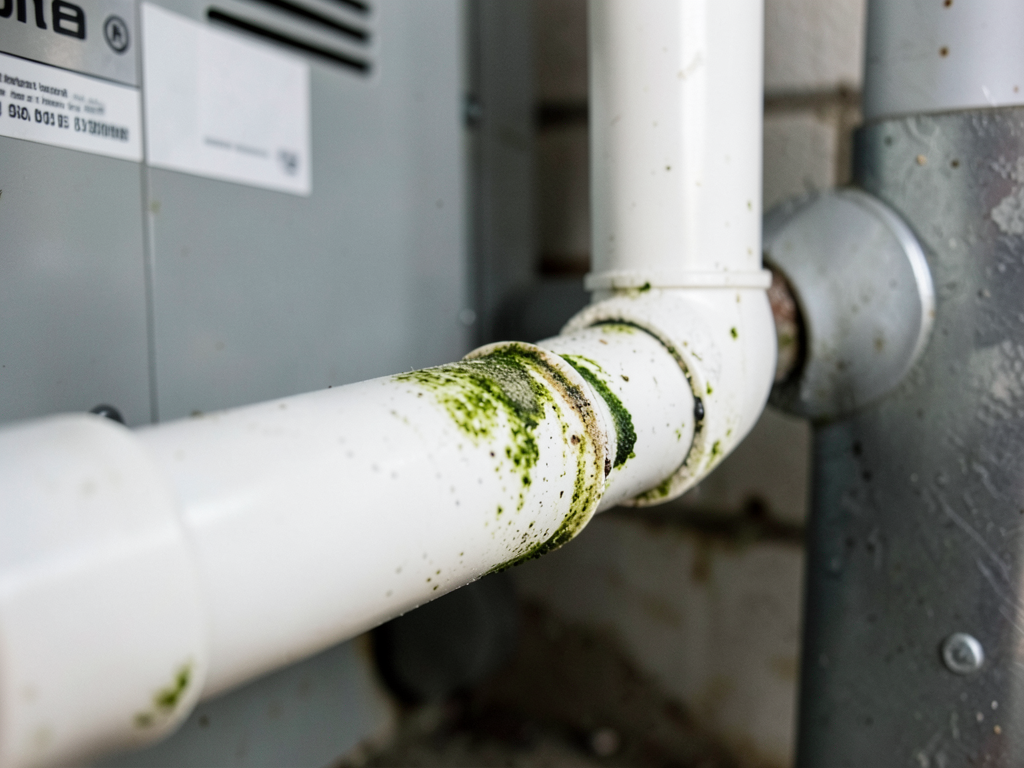
Algae and mold growth represent the primary culprit. These microorganisms thrive in the warm, moist environment inside condensate lines. A single algae cell can multiply into a visible slime layer within 48 hours in optimal conditions.
Mineral scale forms when hard water evaporates inside the line. DC water contains approximately 150 parts per million of dissolved calcium and magnesium. These minerals precipitate out as scale, narrowing the pipe diameter over time.
Debris enters through the evaporator coil drain pan. Dust, pet hair, and construction particles collect in the pan and wash into the drain line during each cooling cycle.
Improper installation causes many clogs. Lines without proper slope allow water to pool. Missing or incorrectly sized traps create negative pressure that pulls air and debris into the system.
Condensate pumps in Lincoln Heights basements often sit in areas with poor air circulation. The stagnant, warm air accelerates biological growth on pump components and in the discharge line. Don’t Let Your Basement Flood—Expert Sump Pump Repair and Maintenance in Northwest DC.
Warning Signs Your Condensate Line Needs Attention
Water pooling around your furnace indicates a clog somewhere in the system. The backup pan under the unit fills when the main drain line stops flowing.
A musty odor near your HVAC equipment signals biological growth in the drain line. The smell intensifies when the system runs and pushes air through contaminated water.
Your furnace shutting off unexpectedly often traces to a tripped float switch in the backup pan. This safety feature prevents water damage by cutting power when the pan fills.
Visible water stains on ceilings below HVAC closets suggest chronic condensate overflow. These stains typically appear as yellow or brown rings that grow larger over time.
Gurgling sounds from your drain line indicate air bubbles forcing through partial blockages. The noise occurs when water tries to flow past accumulated debris.
DIY Maintenance Steps for Lincoln Heights Homeowners
Turn off power to your HVAC system before performing any maintenance. Locate the condensate drain line exit point near your furnace or air handler. This typically appears as a white PVC pipe with a 3/4-inch diameter.
Remove the drain line cap and inspect for visible debris. Use a wet/dry vacuum to suction out any accumulated sludge. Apply the vacuum to both ends of the line if accessible.
Flush the line with distilled white vinegar. Pour one cup of vinegar into the drain line and let it sit for 30 minutes. The acetic acid dissolves mineral scale and kills biological growth without damaging PVC pipes.
Rinse the line thoroughly with clean water after the vinegar treatment. Ensure water flows freely through the entire length of the drain line.
Clean the evaporator coil drain pan with a mild detergent solution. Remove all visible debris and ensure the pan slopes slightly toward the drain opening.
Install a condensate line cleaning tablet or stick in the drain pan. These slow-release products prevent algae and mold growth for up to six months.
Check the condensate pump float switch for proper operation. Fill the pump reservoir with water and verify the pump activates when the water level rises.
Inspect all drain line connections for leaks or loose fittings. Tighten any loose connections and replace cracked sections of pipe.
Professional Maintenance Recommendations
Schedule professional cleaning annually before cooling season begins. A technician uses specialized equipment to clear stubborn blockages and verify proper system operation.
Request a camera inspection of your condensate line if you experience recurring clogs. The camera reveals cracks, sags, or root intrusions that cause persistent problems.
Ask about installing a condensate overflow safety switch if your system lacks one. This device prevents water damage by shutting down the furnace when the backup pan fills. Safely Installing New Gas Lines for Your DC Kitchen Remodel.
Consider upgrading to antimicrobial drain line treatment systems. These devices continuously release low levels of biocide to prevent biological growth.
Verify your system meets current code requirements. The International Residential Code requires secondary drain pans for horizontal equipment and auxiliary drain pans for vertical units in attics or upper floors.
Evaluate your condensate pump if you experience frequent failures. Standard pumps last 5-7 years in Lincoln Heights’ humid conditions. Higher-capacity pumps with stainless steel components offer better reliability. Emergency Sump Pump Failure.
Lincoln Heights Specific Considerations
Rowhome construction in Lincoln Heights creates unique HVAC challenges. Limited utility closet space restricts airflow around equipment, accelerating moisture buildup and biological growth.
Many Lincoln Heights homes feature original HVAC installations from the 1980s and 1990s. These systems often use smaller drain lines than current standards recommend, making them more prone to clogging.
The neighborhood’s proximity to the Anacostia River influences local humidity levels. River valley locations experience slightly higher humidity than surrounding areas, increasing condensate production and biological growth rates.
Older Lincoln Heights homes may have uninsulated condensate lines running through unconditioned spaces. Temperature differentials cause condensation on the outside of drain pipes, adding moisture that promotes growth.
Local water chemistry affects mineral scale formation. DC water’s moderate hardness means scale builds up gradually but consistently throughout the cooling season.
When to Call a Professional
Contact a professional if you notice water damage spreading beyond the immediate HVAC area. Ceiling stains, warped flooring, or mold growth on walls indicate the problem has progressed beyond simple maintenance.
Call for service if your DIY cleaning efforts provide only temporary relief. Recurring clogs within weeks suggest underlying issues like sagging pipes, inadequate slope, or pump problems.
Seek professional help if your furnace repeatedly shuts down due to condensate overflow. This pattern indicates either a severe blockage or malfunctioning safety switch.
Request inspection if you smell strong musty odors when your HVAC system runs. Persistent odors suggest extensive biological growth requiring professional cleaning and treatment.
Schedule service if you cannot locate your condensate drain line exit point. Some Lincoln Heights installations hide drain lines behind walls or in finished spaces, requiring professional tracing.
Preventative Strategies for Long-Term Protection
Install a high-quality air filter and change it regularly. Clean air reduces debris entering the evaporator coil and drain pan.
Maintain proper humidity levels in your home. Use dehumidifiers during peak summer months to reduce overall moisture load on your HVAC system.
Keep the area around your HVAC equipment clean and dust-free. Regular vacuuming prevents debris from entering the system.
Monitor your system’s performance throughout the cooling season. Early detection of reduced cooling capacity or unusual sounds can prevent major condensate line problems.
Document your maintenance activities. Keep records of cleaning dates, parts replaced, and any recurring issues to help diagnose patterns.
Consider upgrading older HVAC components. Modern high-efficiency furnaces produce more condensate than older models, potentially overwhelming undersized drain systems.
Cost Considerations for Lincoln Heights Residents
DIY maintenance requires minimal investment. A wet/dry vacuum, distilled vinegar, and cleaning tablets cost under $50 total.
Professional cleaning services typically range from $150 to $300 depending on system complexity and accessibility. Lincoln Heights rowhomes often fall on the higher end due to tight workspace constraints.
Camera inspections add $100 to $200 to standard service calls but can identify hidden problems that prevent costly water damage.
Emergency service calls for active water leaks cost significantly more, often $300 to $500 for after-hours response. Who to Call When You Need an Emergency Plumber in Georgetown Right Away.
Preventative maintenance contracts offer the best value, typically $200 to $400 annually for comprehensive HVAC care including condensate line service.
Water damage repairs from neglected condensate lines can exceed $5,000 when including ceiling repair, flooring replacement, and mold remediation.
Environmental Impact and Energy Efficiency
Properly functioning condensate lines improve HVAC efficiency. Blocked lines force systems to work harder, increasing energy consumption by 10-15%.
Clean drain systems prevent mold growth that can degrade indoor air quality. Mold spores circulating through HVAC systems create health issues for sensitive individuals.
Regular maintenance extends equipment life. Systems with clean condensate management typically last 3-5 years longer than neglected units.
Proper condensate disposal protects local waterways. The Anacostia River receives runoff from Lincoln Heights, making responsible HVAC maintenance part of watershed protection.
Energy savings from efficient operation reduce carbon emissions. A well-maintained high-efficiency furnace can prevent approximately 1,000 pounds of CO2 emissions annually.
Frequently Asked Questions
How often should I clean my furnace condensate line?
Clean your condensate line at least once annually, preferably before cooling season begins. Homes in Lincoln Heights with high humidity may benefit from cleaning every six months.
Can I use bleach to clean my condensate line?
Avoid using bleach in PVC condensate lines. While bleach kills biological growth, it can damage rubber seals and create harmful fumes. Distilled white vinegar provides similar cleaning power without the risks.
What causes my furnace to shut off when the condensate line clogs?
Most modern furnaces include a float switch in the backup drain pan. When water backs up due to a clogged main line, the float rises and cuts power to prevent flooding. This safety feature protects your home but requires immediate attention.
How can I tell if my condensate line is properly sloped?
A properly sloped line should have a minimum 1/4-inch drop per foot of horizontal run. You can check this by pouring water into the line and observing drainage speed. Slow or uneven drainage suggests improper slope.
Is a condensate pump necessary for my system?
Condensate pumps are required when the drain line exit point sits above the furnace level or when gravity drainage isn’t feasible. Many Lincoln Heights installations use pumps due to basement utility closet configurations.
What size condensate line should my furnace have?
Most residential high-efficiency furnaces require 3/4-inch PVC drain lines. Larger units or those with longer drain runs may need 1-inch lines to prevent clogging and ensure proper drainage.
Protecting Your Home Investment
Your HVAC system represents a significant investment in home comfort and efficiency. The condensate line, though small, plays a crucial role in protecting that investment from water damage and system failure.
Lincoln Heights homeowners face specific challenges due to the neighborhood’s age, construction style, and local climate conditions. Understanding these factors helps you develop effective maintenance strategies that prevent costly repairs.
Regular attention to your condensate line prevents the cascade of problems that begin with a simple clog. Water damage, mold growth, and system failure all trace back to neglected drain maintenance.
The peace of mind that comes from a properly functioning HVAC system is worth the modest time and cost investment required for regular condensate line maintenance.
Don’t wait for water to appear where it shouldn’t. Take proactive steps today to protect your Lincoln Heights home from condensate line problems.
Call (771) 223-8111 today to schedule your professional condensate line inspection and cleaning. Our experienced technicians understand the unique challenges of Lincoln Heights HVAC systems and provide solutions that keep your home dry and comfortable year-round.
Pick up the phone and call (771) 223-8111 before the next heat wave hits. A quick inspection now can prevent emergency service calls and water damage when you need your air conditioning most. For more information, visit ASHRAE HVAC standards.
{
“@context”: “https://schema.org”,
“@type”: “BlogPosting”,
“headline”: “How to Prevent Your High-Efficiency Furnace Condensate Line from Clogging in Lincoln Heights”,
“description”: “Learn why high-efficiency furnace condensate lines clog in Lincoln Heights and how to prevent costly water damage with expert tips from local DC plumbers.”,
“wordCount”: 2115,
“datePublished”: “2026-05-05T12:35:00.000Z”,
“dateModified”: “2026-05-05T12:35:00.000Z”,
“inLanguage”: “en-US”,
“mainEntityOfPage”: {
“@type”: “WebPage”,
“@id”: “https://crestlineplumbingwashingtondc.com”
},
“publisher”: {
“@type”: “LocalBusiness”,
“name”: “Crestline Plumbing Washington DC”,
“url”: “https://crestlineplumbingwashingtondc.com”
},
“author”: {
“@type”: “Organization”,
“name”: “Crestline Plumbing Washington DC”,
“url”: “https://crestlineplumbingwashingtondc.com”
},
“image”: {
“@type”: “ImageObject”,
“url”: “https://crestlineplumbingwashingtondc.com/wp-content/uploads/2026/03/how-to-prevent-your-high-efficiency-furnace-conden-1.png”
}
}
{
“@context”: “https://schema.org”,
“@type”: “Plumber”,
“name”: “Crestline Plumbing Washington DC”,
“url”: “https://crestlineplumbingwashingtondc.com”,
“address”: {
“@type”: “PostalAddress”,
“addressLocality”: “Washington DC”
},
“areaServed”: {
“@type”: “City”,
“name”: “Washington DC”
}
}
{
“@context”: “https://schema.org”,
“@type”: “FAQPage”,
“mainEntity”: [
{
“@type”: “Question”,
“name”: “How often should I clean my furnace condensate line?”,
“acceptedAnswer”: {
“@type”: “Answer”,
“text”: “Clean your condensate line at least once annually, preferably before cooling season begins. Homes in Lincoln Heights with high humidity may benefit from cleaning every six months.”
}
},
{
“@type”: “Question”,
“name”: “Can I use bleach to clean my condensate line?”,
“acceptedAnswer”: {
“@type”: “Answer”,
“text”: “Avoid using bleach in PVC condensate lines. While bleach kills biological growth, it can damage rubber seals and create harmful fumes. Distilled white vinegar provides similar cleaning power without the risks.”
}
},
{
“@type”: “Question”,
“name”: “What causes my furnace to shut off when the condensate line clogs?”,
“acceptedAnswer”: {
“@type”: “Answer”,
“text”: “Most modern furnaces include a float switch in the backup drain pan. When water backs up due to a clogged main line, the float rises and cuts power to prevent flooding. This safety feature protects your home but requires immediate attention.”
}
},
{
“@type”: “Question”,
“name”: “How can I tell if my condensate line is properly sloped?”,
“acceptedAnswer”: {
“@type”: “Answer”,
“text”: “A properly sloped line should have a minimum 1/4-inch drop per foot of horizontal run. You can check this by pouring water into the line and observing drainage speed. Slow or uneven drainage suggests improper slope.”
}
},
{
“@type”: “Question”,
“name”: “Is a condensate pump necessary for my system?”,
“acceptedAnswer”: {
“@type”: “Answer”,
“text”: “Condensate pumps are required when the drain line exit point sits above the furnace level or when gravity drainage isn’t feasible. Many Lincoln Heights installations use pumps due to basement utility closet configurations.”
}
}
]
}
{
“@context”: “https://schema.org”,
“@type”: “BreadcrumbList”,
“itemListElement”: [
{
“@type”: “ListItem”,
“position”: 1,
“name”: “Home”,
“item”: “https://crestlineplumbingwashingtondc.com”
},
{
“@type”: “ListItem”,
“position”: 2,
“name”: “Blog”,
“item”: “https://crestlineplumbingwashingtondc.com/blog”
},
{
“@type”: “ListItem”,
“position”: 3,
“name”: “How to Prevent Your High-Efficiency Furnace Condensate Line from Clogging in Lincoln Heights”
}
]
}
{
“@context”: “https://schema.org”,
“@type”: “Service”,
“serviceType”: “Plumbing”,
“provider”: {
“@type”: “LocalBusiness”,
“name”: “Crestline Plumbing Washington DC”,
“url”: “https://crestlineplumbingwashingtondc.com”
},
“areaServed”: {
“@type”: “City”,
“name”: “Washington DC”
},
“description”: “Learn why high-efficiency furnace condensate lines clog in Lincoln Heights and how to prevent costly water damage with expert tips from local DC plumbers.”
}