
The Challenges of Adding a Sink to Your Kitchen Island in a Brentwood Rowhome
Adding a sink to your kitchen island transforms your Brentwood rowhome’s layout but creates complex plumbing challenges. The narrow footprint of DC rowhomes combined with strict District plumbing codes makes this renovation more complicated than homeowners expect. You need to navigate venting requirements, floor access issues, and permit approvals before breaking ground. DC Department of Buildings Plumbing Permits.
Most Brentwood rowhomes built between 1900 and 1950 have wood joist floors with plaster ceilings below. This means running new supply and drain lines requires cutting through joists or trenching through concrete if you have a basement. The District of Columbia Plumbing Code mandates specific venting methods for island sinks since traditional wall vents won’t work. You’ll need either an island loop vent or an approved air admittance valve, both requiring careful installation to pass inspection. Common Plumbing Problems in Historic Capitol Hill Rowhouses (and How We Fix Them).
Before starting your island sink project understand these core challenges: accessing the floor structure, meeting DC venting requirements, obtaining proper permits from the Department of Buildings, and working within your home’s existing plumbing system. The narrow width of typical Brentwood rowhomes often limits island size, affecting how much plumbing you can install without major structural modifications. EPA Cross-Connection Control Information.
Understanding DC Plumbing Codes for Island Sinks
The District of Columbia Plumbing Code follows IPC standards with local amendments. For island sinks, Section 910.9 specifically addresses island fixture vents. Traditional vertical vents cannot extend through the floor of an island due to the risk of sewer gases entering the living space. This creates the first major hurdle for Brentwood homeowners. Plumbing Bowie.
Two approved solutions exist under DC code. The island loop vent creates a horizontal loop under the floor that connects to the main stack through a horizontal run. This method requires access below the island and careful sloping to maintain proper drainage. The second option uses an air admittance valve (AAV) installed in the cabinet base. While simpler to install, AAVs have specific height and accessibility requirements under Section 917 of the DC code.
DC Water and Sewer Authority also requires compliance with cross-connection prevention standards. Any new island sink installation must include proper backflow prevention devices if you plan to install a dishwasher or water filtration system. These additional components affect both installation complexity and final cost. Emergency Water Shut-Off Service.
Floor Access: Slab vs. Joist Construction in Brentwood
Brentwood rowhomes typically feature either wood joist construction with basement access or concrete slab foundations in some post-war builds. This fundamental difference drives your entire project scope and cost. Don’t Let Your Basement Flood—Expert Sump Pump Repair and Maintenance in Northwest DC.
Wood joist homes allow plumbers to drill through floor joists to run new supply lines and drain pipes. However, each drilled hole weakens structural integrity, so plumbers must follow strict notching guidelines from the International Residential Code. The 2018 IRC limits hole diameter to one-third the joist depth and requires maintaining specific edge distances from top and bottom. Who to Call When You Need an Emergency Plumber in Georgetown Right Away.
Concrete slab construction presents greater challenges. Plumbers must cut through the slab to create a trench for new plumbing lines. This process generates significant dust, requires concrete cutting tools, and creates a mess that extends beyond the work area. After installation, the trench must be refilled with concrete and finished to match existing flooring. This method typically adds $1,500 to $3,000 to project costs compared to joist drilling.
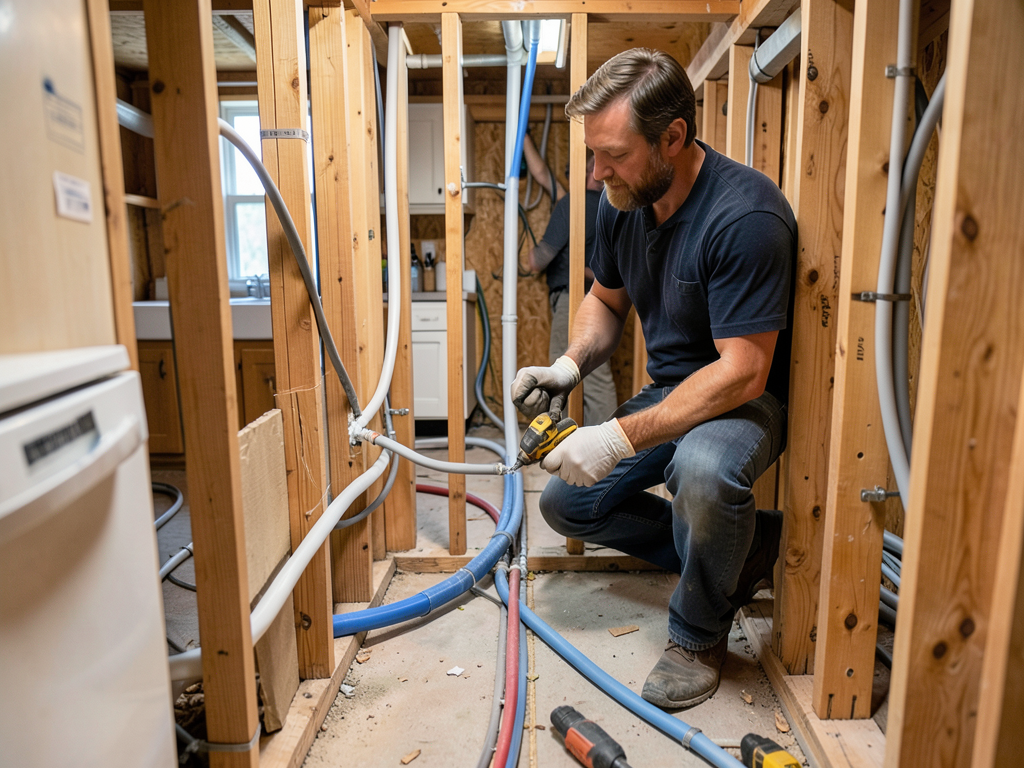
Supply line installation also varies by construction type. In joist homes, flexible PEX tubing can often be snaked through existing cavities. Slab homes require either breaking through the slab or running exposed supply lines through cabinets, which affects the finished appearance.
Venting Solutions: Island Loop vs. Air Admittance Valves
The venting method you choose affects both installation complexity and long-term reliability. Understanding these differences helps you make informed decisions with your plumber.
Island loop vents create a sanitary loop under the floor that connects to the main plumbing stack. This method follows traditional plumbing principles where each fixture has a proper vent to prevent trap siphoning. The loop must maintain a minimum 1/4 inch per foot slope toward the stack and cannot have any dips that could trap water or debris.
Installation requires cutting into the main stack to create the connection point. This means your plumber must access the stack location, which in Brentwood rowhomes often means working in tight basement spaces or cutting into walls on lower floors. The connection itself requires proper no-hub couplings and must be accessible for future inspection.
Air admittance valves offer a simpler alternative. These mechanical devices open when water flows through the drain, allowing air to enter and preventing trap siphoning. Under DC code, AAVs must be installed at least 4 inches above the trap weir and remain accessible for replacement. Most quality AAVs carry warranties of 5 to 10 years but require eventual replacement.
AAVs work well for single fixtures but may not handle multiple connections as effectively as loop vents. If you plan to add a dishwasher or instant hot water dispenser to your island, the additional drainage load might exceed AAV capacity. Your plumber should calculate total fixture units to ensure proper venting capacity.
Permit Requirements and Department of Buildings Process
DC law requires permits for all new plumbing installations, including island sinks. The Department of Buildings (DOB) enforces these requirements through their permitting system, and unpermitted work can result in fines or required removal.
Plumbing permit applications require detailed plans showing fixture locations, drain sizes, vent configurations, and connection points to existing systems. Your licensed plumber must submit these drawings along with their contractor license information and proof of DC business registration. The DOB reviews plans for code compliance before issuing permits.
Inspection requirements include rough-in inspection before covering walls or floors, and final inspection after completion. The inspector checks vent slopes, trap installations, supply line connections, and overall code compliance. Missing inspections can delay project completion and may require exposing finished work for verification.
Permit fees vary based on project scope but typically range from $250 to $750 for residential island sink installations. Your plumber should include these costs in their proposal and handle the permit application process as part of their service.
Cost Factors Specific to Brentwood Rowhomes
Island sink installation costs in Brentwood rowhomes typically range from $3,500 to $8,000, significantly higher than suburban installations due to urban constraints and code requirements.
Labor costs drive much of this difference. DC plumbers charge $125 to $200 per hour, and island sink projects often require 20 to 30 hours of work. This includes demolition, plumbing installation, drywall repair, and finish work. Suburban areas might see rates of $75 to $125 per hour for comparable work.
Material costs also vary by project specifics. PEX supply lines cost $0.50 to $2 per linear foot depending on diameter and quality. Drain pipes range from $2 to $5 per foot for PVC. Vent materials add another $3 to $8 per foot. These costs multiply quickly in island installations requiring extensive new runs.
Unexpected discoveries during demolition can increase costs. Finding galvanized pipes requiring replacement, discovering asbestos in old flooring, or encountering structural issues during joist drilling all add to the final bill. Experienced plumbers include contingency allowances in their estimates for these possibilities.
Step-by-Step Installation Process
Understanding the installation sequence helps you prepare your home and family for the disruption. A typical island sink project follows these phases:
- Planning and Permitting
Your plumber evaluates the existing plumbing system, creates detailed plans, and obtains necessary permits from the DOB. This phase takes 1 to 2 weeks depending on permit processing times.
- Demolition and Access Creation
Existing flooring or drywall is removed to access plumbing pathways. This phase generates significant dust and debris, requiring proper containment and protection of adjacent areas.
- Supply and Drain Line Installation
New PEX or copper supply lines and PVC drain pipes are installed according to plans. All connections must follow manufacturer specifications and code requirements.
- Vent Installation
The chosen venting method (loop vent or AAV) is installed and connected to the main system. This critical step requires precise sloping and secure connections.
- Fixture Installation and Testing
The sink, faucet, and any additional fixtures are installed. The entire system undergoes pressure testing and drain testing to verify proper function.
- Finish Work and Cleanup
Repairs to flooring, drywall, and other affected areas are completed. The work area is cleaned and all debris removed from the property.
The entire process typically requires 3 to 5 days of active work, though permit processing and inspection scheduling can extend the timeline to 3 to 4 weeks total.
Common Mistakes to Avoid
Several pitfalls commonly trap homeowners attempting island sink installations in DC rowhomes. Understanding these helps you avoid costly errors.
Incorrect venting ranks as the most frequent mistake. Some homeowners or inexperienced contractors install traditional wall vents through floors, creating code violations and potential health hazards. Always verify your venting method meets DC code requirements.
Insufficient slope in drain lines causes slow drainage and eventual clogs. The minimum 1/4 inch per foot slope must be maintained throughout the entire run. Measuring and maintaining this slope requires experience and proper tools.
Skipping permits might seem like a cost-saving measure but creates liability issues. If you sell your home, unpermitted work must be disclosed and may require costly remediation. Insurance companies may also deny claims related to unpermitted plumbing work.
Underestimating space requirements leads to cramped, inefficient island designs. Standard island sinks need at least 24 inches of cabinet width, plus space for plumbing connections and trap assemblies. Smaller islands may not accommodate proper plumbing installation.
Choosing the Right Plumber for Your Brentwood Project
Not all plumbers have experience with DC rowhome renovations. Look for these qualifications when selecting your contractor.
DC Master Plumber license is mandatory. This license requires passing rigorous exams and demonstrating extensive experience. Ask to see the license and verify it through the DC Department of Consumer and Regulatory Affairs website.
Experience with historic renovations matters in Brentwood. Many rowhomes have unique challenges like old lead pipes, unusual joist spacing, or previous unpermitted modifications. Plumbers familiar with these issues work more efficiently and avoid costly mistakes.
Insurance coverage protects your investment. Your plumber should carry general liability insurance and workers’ compensation coverage. Request proof of insurance and verify current coverage before signing contracts.
Written contracts prevent misunderstandings. Your agreement should detail scope of work, materials to be used, permit responsibilities, payment schedule, and warranty terms. Avoid contractors who work without written agreements.
Frequently Asked Questions
How long does an island sink installation take in a Brentwood rowhome?
Active installation typically requires 3 to 5 days, but permit processing and inspections can extend the total timeline to 3 to 4 weeks. Wood joist homes often complete faster than concrete slab homes due to easier access.
Can I install an island sink without breaking through my basement ceiling?
Yes, if you have wood joist construction above a basement, plumbers can often run pipes through joist cavities without major ceiling demolition. However, some access holes will be necessary for connections and inspections.
What’s the difference between an island loop vent and an AAV?
An island loop vent creates a traditional plumbing loop under the floor connecting to the main stack, while an AAV is a mechanical device installed in the cabinet base. Loop vents follow traditional plumbing principles but require more installation work. AAVs are simpler but may have shorter lifespans.
Do I need a permit for an island sink in Washington DC?
Yes, DC law requires permits for all new plumbing installations. The Department of Buildings must approve your plans and inspect the work. Unpermitted installations can result in fines and may need to be removed if discovered.
How much does it cost to add plumbing to a kitchen island in DC?
Island sink installations in Brentwood rowhomes typically cost $3,500 to $8,000. Factors affecting cost include construction type, venting method, permit fees, and any unexpected discoveries during demolition.
Can I add a dishwasher to my island sink setup?
Yes, but this increases drainage load and may affect your venting requirements. Your plumber should calculate total fixture units to ensure your venting system can handle the additional load. You’ll also need to consider electrical requirements for the dishwasher.
What happens if my island sink doesn’t drain properly?
Poor drainage usually indicates venting problems, incorrect pipe slopes, or blockages. A licensed plumber can diagnose the issue using inspection cameras and proper testing procedures. Most drainage problems can be corrected without complete reinstallation.
Should I choose PEX or copper supply lines for my island?
PEX offers flexibility and easier installation through tight spaces, while copper provides durability and traditional appeal. Both materials meet DC code requirements. Your plumber can recommend the best option based on your specific installation requirements and budget.
How do I maintain my new island sink plumbing?
Regular maintenance includes checking for leaks under the sink, cleaning drain strainers, and avoiding chemical drain cleaners that can damage pipes. Have your plumber inspect the system annually, especially if you have an AAV that may need replacement.
Can I install the sink myself to save money?
DIY installation violates DC plumbing codes and can create serious problems. Professional installation ensures code compliance, proper venting, and warranty protection. Mistakes can lead to water damage, mold growth, and costly repairs that far exceed professional installation costs.

Ready to Transform Your Brentwood Kitchen?
Adding a sink to your kitchen island requires expertise in DC plumbing codes, rowhome construction, and proper venting methods. Don’t risk code violations or water damage by cutting corners on this complex project.
Call (771) 223-8111 today to schedule your consultation. Our licensed DC Master Plumbers have years of experience with Brentwood rowhome renovations and understand the unique challenges these historic homes present. We handle everything from permit acquisition to final inspection, ensuring your island sink installation meets all District requirements.
Pick up the phone and call (771) 223-8111 before the next storm hits. Don’t let plumbing problems disrupt your kitchen renovation plans. Our team responds quickly and provides clear, upfront pricing so you know exactly what to expect.
Your dream kitchen island with a functional sink is within reach. Contact us now to get started on your Brentwood rowhome transformation.
You may also find this helpful. Choosing Between a Pedestal Sink and a Vanity for Your Tiny Hillcrest Bathroom.
{
“@context”: “https://schema.org”,
“@type”: “BlogPosting”,
“headline”: “The Challenges of Adding a Sink to Your Kitchen Island in a Brentwood Rowhome”,
“description”: “Adding a sink to your Brentwood kitchen island? Learn about DC plumbing codes, venting requirements, and installation challenges specific to rowhomes in Washington DC.”,
“wordCount”: 2408,
“datePublished”: “2026-05-03T15:22:00.000Z”,
“dateModified”: “2026-05-03T15:22:00.000Z”,
“inLanguage”: “en-US”,
“mainEntityOfPage”: {
“@type”: “WebPage”,
“@id”: “https://crestlineplumbingwashingtondc.com”
},
“publisher”: {
“@type”: “LocalBusiness”,
“name”: “Crestline Plumbing Washington DC”,
“url”: “https://crestlineplumbingwashingtondc.com”
},
“author”: {
“@type”: “Organization”,
“name”: “Crestline Plumbing Washington DC”,
“url”: “https://crestlineplumbingwashingtondc.com”
},
“image”: {
“@type”: “ImageObject”,
“url”: “https://crestlineplumbingwashingtondc.com/wp-content/uploads/2026/03/the-challenges-of-adding-a-sink-to-your-kitchen-is-1.png”
}
}
{
“@context”: “https://schema.org”,
“@type”: “Plumber”,
“name”: “Crestline Plumbing Washington DC”,
“url”: “https://crestlineplumbingwashingtondc.com”,
“address”: {
“@type”: “PostalAddress”,
“addressLocality”: “Washington DC”
},
“areaServed”: {
“@type”: “City”,
“name”: “Washington DC”
}
}
{
“@context”: “https://schema.org”,
“@type”: “FAQPage”,
“mainEntity”: [
{
“@type”: “Question”,
“name”: “How long does an island sink installation take in a Brentwood rowhome?”,
“acceptedAnswer”: {
“@type”: “Answer”,
“text”: “Active installation typically requires 3 to 5 days, but permit processing and inspections can extend the total timeline to 3 to 4 weeks. Wood joist homes often complete faster than concrete slab homes due to easier access.”
}
},
{
“@type”: “Question”,
“name”: “Can I install an island sink without breaking through my basement ceiling?”,
“acceptedAnswer”: {
“@type”: “Answer”,
“text”: “Yes, if you have wood joist construction above a basement, plumbers can often run pipes through joist cavities without major ceiling demolition. However, some access holes will be necessary for connections and inspections.”
}
},
{
“@type”: “Question”,
“name”: “What’s the difference between an island loop vent and an AAV?”,
“acceptedAnswer”: {
“@type”: “Answer”,
“text”: “An island loop vent creates a traditional plumbing loop under the floor connecting to the main stack, while an AAV is a mechanical device installed in the cabinet base. Loop vents follow traditional plumbing principles but require more installation work. AAVs are simpler but may have shorter lifespans.”
}
},
{
“@type”: “Question”,
“name”: “Do I need a permit for an island sink in Washington DC?”,
“acceptedAnswer”: {
“@type”: “Answer”,
“text”: “Yes, DC law requires permits for all new plumbing installations. The Department of Buildings must approve your plans and inspect the work. Unpermitted installations can result in fines and may need to be removed if discovered.”
}
},
{
“@type”: “Question”,
“name”: “How much does it cost to add plumbing to a kitchen island in DC?”,
“acceptedAnswer”: {
“@type”: “Answer”,
“text”: “Island sink installations in Brentwood rowhomes typically cost $3,500 to $8,000. Factors affecting cost include construction type, venting method, permit fees, and any unexpected discoveries during demolition.”
}
},
{
“@type”: “Question”,
“name”: “Can I add a dishwasher to my island sink setup?”,
“acceptedAnswer”: {
“@type”: “Answer”,
“text”: “Yes, but this increases drainage load and may affect your venting requirements. Your plumber should calculate total fixture units to ensure your venting system can handle the additional load. You’ll also need to consider electrical requirements for the dishwasher.”
}
},
{
“@type”: “Question”,
“name”: “What happens if my island sink doesn’t drain properly?”,
“acceptedAnswer”: {
“@type”: “Answer”,
“text”: “Poor drainage usually indicates venting problems, incorrect pipe slopes, or blockages. A licensed plumber can diagnose the issue using inspection cameras and proper testing procedures. Most drainage problems can be corrected without complete reinstallation.”
}
},
{
“@type”: “Question”,
“name”: “Should I choose PEX or copper supply lines for my island?”,
“acceptedAnswer”: {
“@type”: “Answer”,
“text”: “PEX offers flexibility and easier installation through tight spaces, while copper provides durability and traditional appeal. Both materials meet DC code requirements. Your plumber can recommend the best option based on your specific installation requirements and budget.”
}
},
{
“@type”: “Question”,
“name”: “How do I maintain my new island sink plumbing?”,
“acceptedAnswer”: {
“@type”: “Answer”,
“text”: “Regular maintenance includes checking for leaks under the sink, cleaning drain strainers, and avoiding chemical drain cleaners that can damage pipes. Have your plumber inspect the system annually, especially if you have an AAV that may need replacement.”
}
},
{
“@type”: “Question”,
“name”: “Can I install the sink myself to save money?”,
“acceptedAnswer”: {
“@type”: “Answer”,
“text”: “DIY installation violates DC plumbing codes and can create serious problems. Professional installation ensures code compliance, proper venting, and warranty protection. Mistakes can lead to water damage, mold growth, and costly repairs that far exceed professional installation costs.”
}
},
{
“@type”: “Question”,
“name”: “Ready to Transform Your Brentwood Kitchen?”,
“acceptedAnswer”: {
“@type”: “Answer”,
“text”: “Adding a sink to your kitchen island requires expertise in DC plumbing codes, rowhome construction, and proper venting methods. Don’t risk code violations or water damage by cutting corners on this complex project.”
}
}
]
}
{
“@context”: “https://schema.org”,
“@type”: “HowTo”,
“name”: “Island Sink Installation Process”,
“step”: [
{
“@type”: “HowToStep”,
“position”: 1,
“name”: “Planning and Permitting”,
“text”: “Your plumber evaluates the existing plumbing system, creates detailed plans, and obtains necessary permits from the DOB. This phase takes 1 to 2 weeks depending on permit processing times.”
},
{
“@type”: “HowToStep”,
“position”: 2,
“name”: “Demolition and Access Creation”,
“text”: “Existing flooring or drywall is removed to access plumbing pathways. This phase generates significant dust and debris, requiring proper containment and protection of adjacent areas.”
},
{
“@type”: “HowToStep”,
“position”: 3,
“name”: “Supply and Drain Line Installation”,
“text”: “New PEX or copper supply lines and PVC drain pipes are installed according to plans. All connections must follow manufacturer specifications and code requirements.”
},
{
“@type”: “HowToStep”,
“position”: 4,
“name”: “Vent Installation”,
“text”: “The chosen venting method (loop vent or AAV) is installed and connected to the main system. This critical step requires precise sloping and secure connections.”
},
{
“@type”: “HowToStep”,
“position”: 5,
“name”: “Fixture Installation and Testing”,
“text”: “The sink, faucet, and any additional fixtures are installed. The entire system undergoes pressure testing and drain testing to verify proper function.”
},
{
“@type”: “HowToStep”,
“position”: 6,
“name”: “Finish Work and Cleanup”,
“text”: “Repairs to flooring, drywall, and other affected areas are completed. The work area is cleaned and all debris removed from the property.”
}
],
“image”: “https://crestlineplumbingwashingtondc.com/wp-content/uploads/2026/03/the-challenges-of-adding-a-sink-to-your-kitchen-is-1.png”
}
{
“@context”: “https://schema.org”,
“@type”: “BreadcrumbList”,
“itemListElement”: [
{
“@type”: “ListItem”,
“position”: 1,
“name”: “Home”,
“item”: “https://crestlineplumbingwashingtondc.com”
},
{
“@type”: “ListItem”,
“position”: 2,
“name”: “Blog”,
“item”: “https://crestlineplumbingwashingtondc.com/blog”
},
{
“@type”: “ListItem”,
“position”: 3,
“name”: “The Challenges of Adding a Sink to Your Kitchen Island in a Brentwood Rowhome”
}
]
}
{
“@context”: “https://schema.org”,
“@type”: “Service”,
“serviceType”: “Plumbing”,
“provider”: {
“@type”: “LocalBusiness”,
“name”: “Crestline Plumbing Washington DC”,
“url”: “https://crestlineplumbingwashingtondc.com”
},
“areaServed”: {
“@type”: “City”,
“name”: “Washington DC”
},
“description”: “Adding a sink to your Brentwood kitchen island? Learn about DC plumbing codes, venting requirements, and installation challenges specific to rowhomes in Washington DC.”
}