
Planning the Plumbing for Your New ADU or Carriage House in Capitol Hill
Adding an Accessory Dwelling Unit or carriage house to your Capitol Hill property requires careful plumbing planning to meet DC Water and Department of Buildings requirements. The process involves more than just running new pipes—it demands understanding Capitol Hill’s historic infrastructure, sewer capacity limits, and strict permitting rules that protect both property owners and the city’s aging water system. DC Water requirements.
DC Water and Sewer Authority Requirements for ADUs
DC Water mandates that all new ADUs connect to the municipal sewer system through proper lateral connections. The agency requires a hydraulic capacity analysis to ensure your existing sewer line can handle the additional flow from a second dwelling unit. Capitol Hill’s combined sewer system, built in the early 1900s, often struggles with capacity during heavy rainfall events. DC Department of Buildings.
Properties in Capitol Hill must also comply with DC Water’s Lead Service Line Replacement requirements. If your main water service line contains lead, DC Water requires replacement before any new ADU connection. The agency provides partial funding for lead line replacement, but the timeline can extend 6-8 weeks beyond your initial permit approval. Emergency Water Shut-Off Service.
Permit Process Through the DC Department of Buildings
The DC Department of Buildings requires separate plumbing permits for ADUs, even when part of a larger building permit. Your application must include detailed plumbing plans showing fixture locations, pipe sizing calculations, and backflow prevention device specifications. The DOB reviews these plans against Title 12F of the DC Municipal Regulations, which governs all plumbing installations in the District. Common Plumbing Problems in Historic Capitol Hill Rowhouses (and How We Fix Them).
Capitol Hill’s historic district status adds another layer of review. The Historic Preservation Office examines all exterior modifications, including new utility connections. They often require that new plumbing lines follow existing paths to minimize visual impact on historic facades. Plumbing Bowie.
Common ADU Plumbing Challenges in Capitol Hill
Capitol Hill’s rowhomes present unique plumbing challenges for ADU additions. Many properties built before 1950 have undersized sewer laterals that cannot support additional fixtures. A typical Capitol Hill rowhome sewer line measures 4 inches in diameter, while modern ADUs often require 6-inch capacity to handle kitchen, bathroom, and laundry fixtures.. Read more about The Challenges of Adding a Sink to Your Kitchen Island in a Brentwood Rowhome.
Water pressure varies dramatically across Capitol Hill due to the area’s elevation changes. Properties near the National Mall enjoy consistent 60-80 PSI pressure, while homes near Lincoln Park may experience pressure drops below 40 PSI during peak usage hours. This variation affects fixture selection and may require pressure-boosting equipment for upper-floor ADUs.. Read more about Preventing Bath Water Scalding with Thermostatic Mixing Valves in Your Colonial Village Home.
Sewer Line Capacity and WASA Connections
DC Water’s hydraulic analysis determines whether your property can support an ADU without major sewer line upgrades. The agency calculates flow rates based on fixture units—one bathroom equals 4 fixture units, a kitchen equals 2, and a laundry room equals 2. Most Capitol Hill properties max out at 12-16 fixture units total.. Read more about Installing a New Ice Maker Water Line for Your Fridge in Near Northeast DC.
If your hydraulic analysis reveals insufficient capacity, you face two options: replace the entire sewer lateral from your foundation to the city main, or install a separate grinder pump system. Grinder pumps cost $3,000-$5,000 but avoid the $8,000-$12,000 expense of full lateral replacement.. Read more about How to Navigate the DC Water Lead Pipe Replacement Program if You Live in Hillcrest.
Our DC ADU Plumbing Process: From Rough-In to Final Inspection
We begin every ADU project with a comprehensive site evaluation. Our master plumbers inspect your existing water service line, sewer lateral condition, and available space for new utility connections. We use video camera inspection to identify any existing blockages, root intrusion, or pipe deterioration that could complicate your ADU installation. Who to Call When You Need an Emergency Plumber in Georgetown Right Away.
During the rough-in phase, we install all drain, waste, and vent lines according to DC code requirements. Capitol Hill’s older homes often require creative venting solutions since traditional roof penetrations may violate historic preservation guidelines. We frequently use air admittance valves (AAVs) to provide proper venting without exterior modifications.. Read more about Why Your Exterior Hose Bib Needs a Vacuum Breaker in Garfield Heights.
The final inspection process involves coordination between DC Water, the Department of Buildings, and the Historic Preservation Office. Each agency conducts separate inspections, and all must approve before you can occupy your new ADU. This process typically takes 2-3 weeks after plumbing completion.. Read more about Deciding Between a Tankless or Storage Tank Water Heater for Your Growing Family in Fort Davis.
Cost Factors for ADU Plumbing in the District
ADU plumbing costs in Capitol Hill vary based on several factors. Properties with accessible basements or crawl spaces cost less to plumb than those requiring extensive demolition to access existing lines. The distance from your main house to the ADU site significantly impacts material and labor costs. Don’t Let Your Basement Flood—Expert Sump Pump Repair and Maintenance in Northwest DC.
Historic properties often require specialized materials to match existing plumbing. We frequently encounter galvanized steel supply lines that need complete replacement with PEX or copper to meet modern code requirements. These material upgrades add $2,000-$4,000 to typical ADU plumbing budgets.
Permit fees for ADU plumbing in DC average $500-$800, but expedited review costs an additional $300-$500. The total plumbing investment for a complete ADU installation typically ranges from $8,000-$15,000, depending on complexity and existing infrastructure condition.
Why Choose a DC-Licensed Master Plumber for Your ADU?
DC-licensed master plumbers understand the unique challenges of Capitol Hill’s infrastructure. We know which neighborhoods have lead service lines, where combined sewer overflows occur, and how to navigate the city’s complex permitting process. Our experience prevents costly mistakes that could delay your ADU project by months.
DC Water requires that all new connections be inspected by their field staff before activation. Only licensed master plumbers can coordinate these inspections and ensure compliance with all local codes. Attempting DIY plumbing or hiring out-of-state contractors often results in failed inspections and expensive rework.. Read more about Comparing Hybrid Heat Pump Water Heaters to Gas Models for Your Mount Vernon Triangle Condo.
Our team maintains current DC Water contractor status and understands their specific requirements for ADU connections. We handle all permit applications, coordinate inspections, and ensure your new dwelling unit meets every code requirement before final approval.. Read more about Evaluating Flo by Moen vs. Phyn Smart Water Shut Off Valves for Your Home in Stronghold.
Frequently Asked Questions
Do I need a separate water meter for my ADU?
DC Water requires separate water meters for all ADUs intended for rental or separate occupancy. The agency installs dedicated meters during the final inspection phase, and you’ll receive a separate monthly bill for ADU water usage. This requirement helps track consumption and ensures proper billing for multi-unit properties.. Read more about What to Expect During a Gas Line Inspection for Your Fireplace in Wesley Heights.
How long does the entire ADU plumbing permitting process take?
The complete process typically requires 8-12 weeks from initial application to final approval. Plan 2-3 weeks for permit review, 4-6 weeks for any required lead service line replacement, and 2-3 weeks for construction and inspections. Starting the process 4-6 months before your desired completion date ensures adequate buffer time.
Can I install a separate gas line for my ADU kitchen?
Yes, but DC Gas requires separate permits and inspections for any new gas service. The gas line must be sized according to the total BTU load of all appliances, and proper shut-off valves must be installed at both the main house and ADU locations. Our master plumbers coordinate with licensed gas fitters to ensure complete compliance.
What happens if my sewer line fails inspection?
Failed inspections typically result from undersized pipes, improper venting, or inadequate cleanouts. Our team provides detailed correction plans and can often complete repairs within 1-2 days. We maintain relationships with DC Water inspectors and understand exactly what they look for during each inspection phase.. Read more about Insulating Exposed Pipes in Observatory Circle Homes to Prevent Mid-Winter Disasters.
Will my ADU plumbing affect my main house water pressure?
Properly designed ADU plumbing should not impact your main house water pressure. We calculate total demand and may recommend pressure-boosting equipment if your existing system cannot support both dwellings simultaneously. Most Capitol Hill homes built after 1970 have adequate pressure for dual occupancy.

Photo showing a DC Water inspector examining a new ADU sewer lateral connection during final inspection, with Capitol Hill rowhomes visible in background.
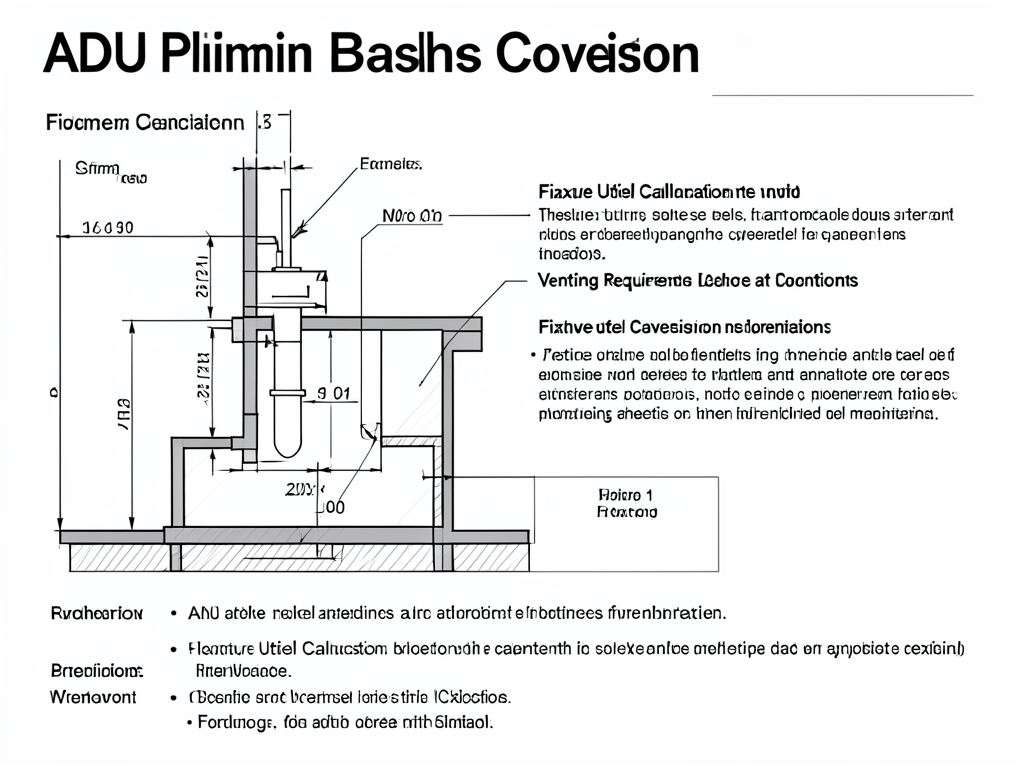
Diagram illustrating proper ADU plumbing layout for a basement conversion, showing fixture unit calculations and venting requirements according to DC code.
Image of a plumber using video inspection equipment to examine an existing sewer line in a Capitol Hill basement before ADU planning begins.
Ready to Start Your ADU Plumbing Project?
Adding an ADU to your Capitol Hill property represents a significant investment in your home’s value and functionality. The plumbing requirements may seem complex, but our experienced team handles every detail from initial design through final inspection. We understand DC’s unique infrastructure challenges and work efficiently to keep your project on schedule.
Don’t let plumbing complications derail your ADU plans. Call (771) 223-8111 today to schedule your free ADU plumbing consultation. We’ll evaluate your property’s capacity, explain all permit requirements, and provide a detailed timeline for your specific situation. Our master plumbers have completed dozens of successful ADU projects throughout Capitol Hill and understand exactly what it takes to get your new dwelling unit approved and operational.
Pick up the phone and call (771) 223-8111 before the next storm hits or your building permit expires. We’re ready to help you navigate DC’s ADU requirements and create the perfect plumbing system for your new carriage house or accessory dwelling unit.
You may also find this helpful. Updating Your NoMa Business with ADA Compliant Bathroom Plumbing and Fixtures.
You may also find this helpful. Why Your Burleith Gas Fireplace Needs a Professional Inspection and Line Repair.
You may also find this helpful. The Best Ultra-Quiet Toilets for Luxury Apartments and Condos in The Wharf.
You may also find this helpful. What to Do When Your Dishwasher Leaks and Damages Your Carver Langston Kitchen.
You may also find this helpful. Why Your Floor Drains Keep Smelling and How a Trap Primer Solves it in Skyland.
You may also find this helpful. How to Choose a High-Pressure Shower Head That Follows DC Water Conservation Laws.
{
“@context”: “https://schema.org”,
“@type”: “BlogPosting”,
“headline”: “Planning the Plumbing for Your New ADU or Carriage House in Capitol Hill”,
“description”: “Learn how to navigate DC Water permits, sewer capacity, and historic building codes when adding an ADU or carriage house in Capitol Hill. Get expert guidance now.”,
“wordCount”: 1509,
“datePublished”: “2026-04-22T10:06:00.000Z”,
“dateModified”: “2026-04-22T10:06:00.000Z”,
“inLanguage”: “en-US”,
“mainEntityOfPage”: {
“@type”: “WebPage”,
“@id”: “https://crestlineplumbingwashingtondc.com”
},
“publisher”: {
“@type”: “LocalBusiness”,
“name”: “Crestline Plumbing Washington DC”,
“url”: “https://crestlineplumbingwashingtondc.com”
},
“author”: {
“@type”: “Organization”,
“name”: “Crestline Plumbing Washington DC”,
“url”: “https://crestlineplumbingwashingtondc.com”
},
“image”: {
“@type”: “ImageObject”,
“url”: “https://crestlineplumbingwashingtondc.com/wp-content/uploads/2026/03/planning-the-plumbing-for-your-new-adu-or-carriage-1.png”
}
}
{
“@context”: “https://schema.org”,
“@type”: “Plumber”,
“name”: “Crestline Plumbing Washington DC”,
“url”: “https://crestlineplumbingwashingtondc.com”,
“address”: {
“@type”: “PostalAddress”,
“addressLocality”: “Washington DC”
},
“areaServed”: {
“@type”: “City”,
“name”: “Washington DC”
}
}
{
“@context”: “https://schema.org”,
“@type”: “FAQPage”,
“mainEntity”: [
{
“@type”: “Question”,
“name”: “Why Choose a DC-Licensed Master Plumber for Your ADU?”,
“acceptedAnswer”: {
“@type”: “Answer”,
“text”: “DC-licensed master plumbers understand the unique challenges of Capitol Hill’s infrastructure. We know which neighborhoods have lead service lines, where combined sewer overflows occur, and how to navigate the city’s complex permitting process. Our experience prevents costly mistakes that could delay your ADU project by months.”
}
},
{
“@type”: “Question”,
“name”: “Do I need a separate water meter for my ADU?”,
“acceptedAnswer”: {
“@type”: “Answer”,
“text”: “DC Water requires separate water meters for all ADUs intended for rental or separate occupancy. The agency installs dedicated meters during the final inspection phase, and you’ll receive a separate monthly bill for ADU water usage. This requirement helps track consumption and ensures proper billing for multi-unit properties.”
}
},
{
“@type”: “Question”,
“name”: “How long does the entire ADU plumbing permitting process take?”,
“acceptedAnswer”: {
“@type”: “Answer”,
“text”: “The complete process typically requires 8-12 weeks from initial application to final approval. Plan 2-3 weeks for permit review, 4-6 weeks for any required lead service line replacement, and 2-3 weeks for construction and inspections. Starting the process 4-6 months before your desired completion date ensures adequate buffer time.”
}
},
{
“@type”: “Question”,
“name”: “Can I install a separate gas line for my ADU kitchen?”,
“acceptedAnswer”: {
“@type”: “Answer”,
“text”: “Yes, but DC Gas requires separate permits and inspections for any new gas service. The gas line must be sized according to the total BTU load of all appliances, and proper shut-off valves must be installed at both the main house and ADU locations. Our master plumbers coordinate with licensed gas fitters to ensure complete compliance.”
}
},
{
“@type”: “Question”,
“name”: “What happens if my sewer line fails inspection?”,
“acceptedAnswer”: {
“@type”: “Answer”,
“text”: “Failed inspections typically result from undersized pipes, improper venting, or inadequate cleanouts. Our team provides detailed correction plans and can often complete repairs within 1-2 days. We maintain relationships with DC Water inspectors and understand exactly what they look for during each inspection phase.”
}
},
{
“@type”: “Question”,
“name”: “Will my ADU plumbing affect my main house water pressure?”,
“acceptedAnswer”: {
“@type”: “Answer”,
“text”: “Properly designed ADU plumbing should not impact your main house water pressure. We calculate total demand and may recommend pressure-boosting equipment if your existing system cannot support both dwellings simultaneously. Most Capitol Hill homes built after 1970 have adequate pressure for dual occupancy.”
}
},
{
“@type”: “Question”,
“name”: “Ready to Start Your ADU Plumbing Project?”,
“acceptedAnswer”: {
“@type”: “Answer”,
“text”: “Adding an ADU to your Capitol Hill property represents a significant investment in your home’s value and functionality. The plumbing requirements may seem complex, but our experienced team handles every detail from initial design through final inspection. We understand DC’s unique infrastructure challenges and work efficiently to keep your project on schedule.”
}
}
]
}
{
“@context”: “https://schema.org”,
“@type”: “BreadcrumbList”,
“itemListElement”: [
{
“@type”: “ListItem”,
“position”: 1,
“name”: “Home”,
“item”: “https://crestlineplumbingwashingtondc.com”
},
{
“@type”: “ListItem”,
“position”: 2,
“name”: “Blog”,
“item”: “https://crestlineplumbingwashingtondc.com/blog”
},
{
“@type”: “ListItem”,
“position”: 3,
“name”: “Planning the Plumbing for Your New ADU or Carriage House in Capitol Hill”
}
]
}
{
“@context”: “https://schema.org”,
“@type”: “Service”,
“serviceType”: “Plumbing”,
“provider”: {
“@type”: “LocalBusiness”,
“name”: “Crestline Plumbing Washington DC”,
“url”: “https://crestlineplumbingwashingtondc.com”
},
“areaServed”: {
“@type”: “City”,
“name”: “Washington DC”
},
“description”: “Learn how to navigate DC Water permits, sewer capacity, and historic building codes when adding an ADU or carriage house in Capitol Hill. Get expert guidance now.”
}