
Updating Your NoMa Business with ADA Compliant Bathroom Plumbing and Fixtures
Running a business in NoMa means navigating strict accessibility requirements. The Americans with Disabilities Act (ADA) sets clear standards for commercial restrooms that go beyond basic plumbing. These regulations cover everything from toilet height and grab bar placement to faucet operation and clear floor space. Non-compliance can result in fines, lawsuits, and forced closures. Common Plumbing Problems in Historic Capitol Hill Rowhouses (and How We Fix Them).
Washington DC building inspectors enforce ADA compliance through the Department of Buildings (DOB). They check that restroom fixtures meet specific measurements, clearances, and operational requirements. A licensed DC Master Plumber understands these technical standards and can help your NoMa business pass inspection the first time. DC Department of Buildings permit information.
ADA compliance affects every aspect of commercial restroom design. The 2010 ADA Standards for Accessible Design specify exact dimensions for toilet stalls, sink heights, and turning spaces. These requirements ensure people with mobility challenges can use your facilities safely and independently. Your plumbing fixtures must work within these spatial constraints while meeting performance standards. 2010 ADA Standards for Accessible Design.
NoMa’s mix of modern office towers and converted industrial spaces presents unique compliance challenges. Older buildings may need structural modifications to accommodate ADA clearances. Newer constructions must integrate accessibility features from the start. Understanding these requirements helps you plan renovations that meet both legal standards and your business needs.
Expert ADA Retrofitting & Installation for DC Businesses
ADA bathroom retrofits require specialized knowledge of both plumbing systems and accessibility standards. A typical retrofit involves removing existing fixtures, modifying plumbing rough-ins, and installing new compliant hardware. This process must maintain building integrity while creating accessible spaces. Safely Installing New Gas Lines for Your DC Kitchen Remodel.
Commercial plumbers assess your current layout against ADA requirements. They measure existing clearances, evaluate door swings, and check fixture heights. This audit identifies what modifications are needed to achieve compliance. Some changes are simple like replacing faucet handles. Others require moving walls or rerouting pipes. Who to Call When You Need an Emergency Plumber in Georgetown Right Away.
The retrofitting process follows a specific sequence. First, we secure permits from DC DOB. Then we remove non-compliant fixtures and modify plumbing infrastructure. Next, we install new ADA-compliant fixtures and test all systems. Finally, we coordinate with inspectors for final approval. Plumbing Bowie.
Timing matters for ADA upgrades. Many NoMa businesses schedule retrofits during off-hours or weekends to minimize disruption. A professional plumbing team can complete most commercial bathroom retrofits in 2-3 days, depending on complexity. We work efficiently to get your restrooms back in service quickly.
Cost factors include fixture selection, demolition needs, and plumbing modifications. Basic retrofits with standard fixtures cost less than premium installations with touchless technology. We provide detailed estimates that break down each component so you understand where your investment goes.
Key ADA Plumbing Requirements for District Properties
ADA compliance covers specific technical requirements for every plumbing fixture. These standards ensure accessibility while maintaining functionality. Understanding these requirements helps you select appropriate fixtures and plan your layout.
Water pressure and flow rates must meet ADA specifications. Faucets require no more than 5 pounds of force to operate. This eliminates twisting handles and promotes lever or touchless operation. Water temperature must stay below 120°F to prevent scalding injuries. Emergency Water Shut-Off Service.
Pipe insulation becomes critical in ADA spaces. Exposed pipes under sinks must be insulated or recessed to prevent contact with knees and legs. This protects users from hot surfaces and allows proper knee clearance. Insulation must cover pipes within 15 inches of the floor.
Drain locations affect usability. Floor drains must be positioned to avoid creating obstacles in wheelchair turning spaces. Shower drains in accessible stalls need linear designs that work with sloped floors. Proper drain placement prevents water pooling that could create slip hazards.
Water hammer arrestors protect plumbing systems in high-traffic commercial restrooms. These devices prevent pressure surges when automatic flush valves close suddenly. Without them, pipes can bang and joints can fail, causing leaks and water damage.
ADA Compliant Restroom Standards (Toilets & Urinals)
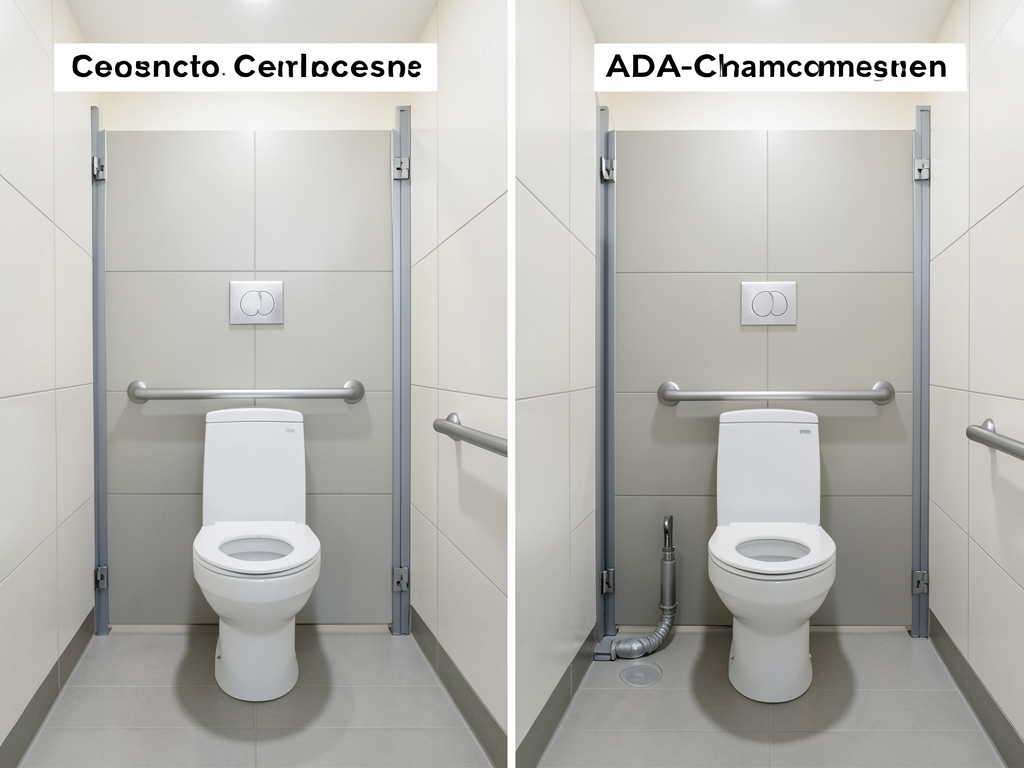
Toilet height requirements ensure users can transfer from wheelchairs safely. ADA-compliant toilets sit 17-19 inches from floor to seat. This height matches standard wheelchair armrests, making transfers easier. The toilet centerline must be 16-18 inches from the side wall.
Grab bars provide essential support for transfers and balance. Side wall grab bars mount 33-36 inches above the floor. Rear grab bars install 36 inches long, extending 12 inches from the centerline on one side. These bars must support 250 pounds of force.
Stall dimensions create necessary maneuvering space. Wheelchair-accessible stalls require minimum 60-inch width and 56-inch depth (wall-mounted toilet) or 59-inch depth (floor-mounted toilet). Doors must swing out or use sliding mechanisms to avoid blocking access.
Ambulatory accessible stalls serve users who walk with assistance. These require 36-inch width minimum with extended grab bars. The stall length must accommodate a 48-inch depth plus door swing clearance.
Urinals need specific mounting heights and clearances. Rim height cannot exceed 17 inches from floor. The centerline must sit 12 inches from any side obstruction. Flush controls require front mounting for easy reach from a seated position.
Accessible Sinks, Faucets, and Knee Clearance Specs
ADA sinks combine proper height with adequate knee space underneath. The rim must sit no higher than 34 inches from floor. Knee clearance requires minimum 27 inches high, 30 inches wide, and 19 inches deep. This space allows wheelchair users to roll under the sink.
Faucet operation must accommodate limited hand strength. Lever handles, push buttons, or touchless sensors work best. Each control requires no more than 5 pounds of force and one-hand operation. Continuous pressure is not allowed.
Exposed pipes under sinks need insulation or protective covers. This prevents contact with hot water lines and protects users from burns. Insulation must cover all pipes within 15 inches of the floor and extend along the full depth of knee clearance.
Drain placement affects usability. The drain should center under the faucet to minimize reaching. Offset drains can force users to stretch across the sink bowl, creating balance issues for those with limited mobility.
Soap dispensers and hand dryers require specific mounting heights. Dispensers install 44 inches maximum above floor. Hand dryers mount 48 inches maximum for forward reach or 54 inches maximum for side reach. Controls must operate with one hand and require minimal force.
Commercial Water Fountain & Cooler Compliance
Drinking fountains in commercial buildings must serve both standing and seated users. Adult units require a minimum clear floor space of 30 inches by 48 inches. This allows a wheelchair to approach and use the lower unit.
Fountain spout height affects accessibility. The spout must be no higher than 36 inches from floor. It should provide a water stream at least 4 inches high to allow cup filling. The stream must extend at least 5 inches from the front of the unit.
Controls need front or side mounting for easy reach. They must operate with one hand and require less than 5 pounds of force. Continuous pressure is not allowed. Many modern units use electronic sensors that activate when hands approach.
Clearing space around fountains matters for wheelchair access. A minimum 30-inch wide by 48-inch deep clear floor space must be provided. This space can be positioned for either parallel or perpendicular approach, depending on the unit design.
Floor-mounted coolers have specific clearance requirements. The floor space must extend under the unit to allow knee and toe clearance. This typically means a 30-inch wide by 19-inch deep clear space under the cooler.
Navigating DC Building Codes and ADA Regulations
Washington DC enforces both federal ADA standards and local building codes. The DC Construction Codes Supplement modifies national standards for local conditions. Understanding these requirements prevents costly mistakes during renovations.
DC Water mandates specific backflow prevention devices for commercial buildings. These prevent contamination of the public water supply. Most NoMa businesses need reduced pressure principle (RPZ) assemblies on water service lines.
Permit requirements vary by project scope. Simple fixture replacements may qualify for minor permits. Major renovations involving plumbing rerouting need full building permits. DC DOB reviews plans to ensure ADA compliance before issuing permits.
Inspection sequences matter for commercial projects. Rough-in inspections occur after plumbing installation but before wall closure. Final inspections verify fixture installation and ADA clearances. Missing inspections can delay occupancy permits.
Historic preservation adds complexity in certain NoMa areas. Buildings near the Capitol or in designated historic districts may need special approvals. These often require maintaining original facade elements while upgrading interior accessibility.
Fire codes intersect with ADA requirements. Restroom doors must comply with both accessibility and fire safety standards. This sometimes means using special hardware that allows one-hand operation while maintaining fire ratings.
Why Choose a Licensed DC Master Plumber for Accessibility Compliance
ADA compliance requires more than basic plumbing skills. A licensed DC Master Plumber understands the technical requirements, permit processes, and inspection standards specific to Washington DC. This expertise prevents costly mistakes and ensures your project passes inspection.
Experience matters when working in NoMa’s diverse building stock. A master plumber knows how to handle the challenges of retrofitting older buildings while meeting modern accessibility standards. They understand local material requirements and installation techniques that satisfy both ADA and DC codes.
Professional plumbers coordinate with other trades during commercial renovations. They work with architects to ensure plumbing layouts meet ADA spatial requirements. They coordinate with electricians on sensor-operated fixtures and with carpenters on structural modifications.
Insurance and licensing protect your business investment. A licensed plumber carries proper liability coverage and workers’ compensation. They understand permit requirements and can navigate the DC DOB approval process efficiently.
Quality workmanship prevents future problems. Proper pipe support, leak-free connections, and correct fixture installation reduce maintenance costs. A professional installation lasts longer and performs better than rushed or improper work.
Documentation matters for commercial properties. Professional plumbers provide detailed records of installations, permits, and inspections. This documentation helps with future renovations and demonstrates due diligence for liability protection.
Our ADA Plumbing Process: From Audit to Inspection
Our ADA compliance process starts with a comprehensive site audit. We measure existing fixtures, clearances, and plumbing locations. We compare these measurements against current ADA standards and DC building codes. This audit identifies specific compliance issues and recommends solutions.
Permit acquisition follows the audit. We prepare detailed drawings showing proposed modifications and fixture locations. These plans go to DC DOB for review and approval. We handle all permit fees and paperwork, saving you time and frustration.
During demolition, we protect existing finishes and minimize dust. We carefully remove non-compliant fixtures and disconnect plumbing lines. This phase often reveals hidden issues like corroded pipes or inadequate venting that need addressing.
Installation involves both new fixtures and plumbing modifications. We rough in new supply lines, drains, and vents according to approved plans. We ensure all pipes are properly supported and meet code requirements for slope and sizing.
Fixture installation follows precise measurements. We verify that each toilet, sink, and urinal meets ADA height and clearance requirements. We test all fixtures for proper operation and adjust as needed to ensure compliance.
Final inspection preparation includes cleaning all fixtures and verifying operation. We check that all grab bars are securely mounted and that floor surfaces are clean and dry. We provide you with documentation showing compliance with all requirements.
Post-installation support includes answering any questions from inspectors and making minor adjustments if needed. We stand behind our work with warranties on both labor and fixtures installed.
Frequently Asked Questions
What are the most common ADA violations in commercial restrooms?
Common violations include toilet heights outside the 17-19 inch range, grab bars mounted at incorrect heights or with insufficient support, sinks lacking proper knee clearance, and faucets requiring too much force to operate. Many violations occur when businesses use residential fixtures in commercial settings.
How much does an ADA bathroom retrofit typically cost?
Costs vary based on scope, but basic retrofits start around $3,000-5,000 per restroom. This covers new fixtures, basic plumbing modifications, and labor. Complex projects requiring structural changes or premium fixtures can cost $10,000 or more. We provide detailed estimates after our initial audit.
Do I need permits for ADA bathroom upgrades?
Most commercial ADA upgrades require permits from DC DOB. Simple fixture replacements may qualify for minor permits. Projects involving plumbing rerouting, structural changes, or electrical modifications need full building permits. We handle all permitting to ensure your project meets legal requirements.
How long does an ADA bathroom retrofit take?
Most commercial retrofits take 2-3 days, depending on complexity. Simple fixture replacements finish faster. Projects requiring structural modifications or extensive plumbing work take longer. We work efficiently to minimize business disruption and coordinate with your schedule.
What happens if my bathroom fails ADA inspection?
Failed inspections result in correction notices and potential fines. You must make required modifications and request re-inspection. Repeated violations can lead to business closure orders. Working with an experienced ADA plumber prevents these issues by ensuring compliance from the start.

Call (771) 223-8111 today to schedule your ADA compliance inspection. Our licensed DC Master Plumbers will assess your current facilities and recommend solutions that meet all requirements while fitting your budget and timeline. Don’t risk fines or lawsuits from non-compliant restrooms.
You may also find this helpful. Preventing Parking Lot Floods with Commercial Storm Drain Cleaning in Langdon.
{
“@context”: “https://schema.org”,
“@type”: “BlogPosting”,
“headline”: “Updating Your NoMa Business with ADA Compliant Bathroom Plumbing and Fixtures”,
“description”: “Ensure your NoMa business meets ADA standards with expert bathroom plumbing upgrades. Learn compliance requirements, fixture specs, and local DC permitting from licensed plumbers.”,
“wordCount”: 2222,
“datePublished”: “2026-04-21T15:45:00.000Z”,
“dateModified”: “2026-04-21T15:45:00.000Z”,
“inLanguage”: “en-US”,
“mainEntityOfPage”: {
“@type”: “WebPage”,
“@id”: “https://crestlineplumbingwashingtondc.com”
},
“publisher”: {
“@type”: “LocalBusiness”,
“name”: “Crestline Plumbing Washington DC”,
“url”: “https://crestlineplumbingwashingtondc.com”
},
“author”: {
“@type”: “Organization”,
“name”: “Crestline Plumbing Washington DC”,
“url”: “https://crestlineplumbingwashingtondc.com”
},
“image”: {
“@type”: “ImageObject”,
“url”: “https://crestlineplumbingwashingtondc.com/wp-content/uploads/2026/03/updating-your-noma-business-with-ada-compliant-bat-1.png”
}
}
{
“@context”: “https://schema.org”,
“@type”: “Plumber”,
“name”: “Crestline Plumbing Washington DC”,
“url”: “https://crestlineplumbingwashingtondc.com”,
“address”: {
“@type”: “PostalAddress”,
“addressLocality”: “Washington DC”
},
“areaServed”: {
“@type”: “City”,
“name”: “Washington DC”
}
}
{
“@context”: “https://schema.org”,
“@type”: “FAQPage”,
“mainEntity”: [
{
“@type”: “Question”,
“name”: “What are the most common ADA violations in commercial restrooms?”,
“acceptedAnswer”: {
“@type”: “Answer”,
“text”: “Common violations include toilet heights outside the 17-19 inch range, grab bars mounted at incorrect heights or with insufficient support, sinks lacking proper knee clearance, and faucets requiring too much force to operate. Many violations occur when businesses use residential fixtures in commercial settings.”
}
},
{
“@type”: “Question”,
“name”: “How much does an ADA bathroom retrofit typically cost?”,
“acceptedAnswer”: {
“@type”: “Answer”,
“text”: “Costs vary based on scope, but basic retrofits start around $3,000-5,000 per restroom. This covers new fixtures, basic plumbing modifications, and labor. Complex projects requiring structural changes or premium fixtures can cost $10,000 or more. We provide detailed estimates after our initial audit.”
}
},
{
“@type”: “Question”,
“name”: “Do I need permits for ADA bathroom upgrades?”,
“acceptedAnswer”: {
“@type”: “Answer”,
“text”: “Most commercial ADA upgrades require permits from DC DOB. Simple fixture replacements may qualify for minor permits. Projects involving plumbing rerouting, structural changes, or electrical modifications need full building permits. We handle all permitting to ensure your project meets legal requirements.”
}
},
{
“@type”: “Question”,
“name”: “How long does an ADA bathroom retrofit take?”,
“acceptedAnswer”: {
“@type”: “Answer”,
“text”: “Most commercial retrofits take 2-3 days, depending on complexity. Simple fixture replacements finish faster. Projects requiring structural modifications or extensive plumbing work take longer. We work efficiently to minimize business disruption and coordinate with your schedule.”
}
},
{
“@type”: “Question”,
“name”: “What happens if my bathroom fails ADA inspection?”,
“acceptedAnswer”: {
“@type”: “Answer”,
“text”: “Failed inspections result in correction notices and potential fines. You must make required modifications and request re-inspection. Repeated violations can lead to business closure orders. Working with an experienced ADA plumber prevents these issues by ensuring compliance from the start.”
}
}
]
}
{
“@context”: “https://schema.org”,
“@type”: “BreadcrumbList”,
“itemListElement”: [
{
“@type”: “ListItem”,
“position”: 1,
“name”: “Home”,
“item”: “https://crestlineplumbingwashingtondc.com”
},
{
“@type”: “ListItem”,
“position”: 2,
“name”: “Blog”,
“item”: “https://crestlineplumbingwashingtondc.com/blog”
},
{
“@type”: “ListItem”,
“position”: 3,
“name”: “Updating Your NoMa Business with ADA Compliant Bathroom Plumbing and Fixtures”
}
]
}
{
“@context”: “https://schema.org”,
“@type”: “Service”,
“serviceType”: “Plumbing”,
“provider”: {
“@type”: “LocalBusiness”,
“name”: “Crestline Plumbing Washington DC”,
“url”: “https://crestlineplumbingwashingtondc.com”
},
“areaServed”: {
“@type”: “City”,
“name”: “Washington DC”
},
“description”: “Ensure your NoMa business meets ADA standards with expert bathroom plumbing upgrades. Learn compliance requirements, fixture specs, and local DC permitting from licensed plumbers.”
}