
Why Your Eckington Basement Smells Like Sewage Even Without a Backup
Sewer gas in your basement without a backup is more than just unpleasant—it’s a warning sign. The musty, rotten-egg odor you’re noticing could be hydrogen sulfide, a toxic gas that can cause headaches, nausea, and even unconsciousness in high concentrations. In older Eckington rowhomes, this smell often comes from hidden plumbing failures that homeowners overlook until the problem worsens. Common Plumbing Problems in Historic Capitol Hill Rowhouses (and How We Fix Them).
Before you panic, here’s the good news: most basement sewer smells have simple causes and can be fixed quickly. But you need to act fast to protect your family’s health and prevent costly damage. Let’s walk through what’s really happening under your floors and what you can do about it right now. Don’t Let Your Basement Flood—Expert Sump Pump Repair and Maintenance in Northwest DC.
Immediate Safety: Is Sewer Gas Dangerous?
Yes. Sewer gas contains methane, hydrogen sulfide, and ammonia—all potentially harmful in enclosed spaces. Hydrogen sulfide smells like rotten eggs at low concentrations but can paralyze your sense of smell at higher levels, making you think the danger has passed when it’s actually getting worse.
Here’s when you need to leave immediately:
- You smell strong sewage odor that doesn’t go away after ventilating
- You experience dizziness, headaches, or nausea while in the basement
- You hear hissing sounds near plumbing fixtures
- You see visible corrosion on pipes or fixtures
If any of these apply, evacuate everyone from the basement and call (771) 223-8111 for emergency service. Don’t wait—these gases can be flammable and explosive at high concentrations. Who to Call When You Need an Emergency Plumber in Georgetown Right Away.
5 Common Causes for Basement Sewer Odors in Eckington Homes
Eckington’s historic rowhomes built in the early 1900s have unique plumbing challenges. The combination of aging infrastructure and Washington DC’s humid climate creates perfect conditions for sewer gas problems. DC Water.
1. Dried Out P-Traps in Floor Drains
Floor drains in basements sit unused for months, allowing the water in their P-traps to evaporate. Once that water seal breaks, sewer gas flows freely into your basement. This is the most common cause in Eckington homes, especially during summer when humidity accelerates evaporation.. Read more about Adding a Basement Bathroom in Woodridge – What You Need to Know About Ejector Pumps.
2. Cracked Vent Stacks
Your plumbing system needs proper ventilation to maintain pressure balance. In older DC homes, cast iron vent stacks develop hairline cracks from thermal expansion and contraction. These cracks let sewer gas escape before it reaches the roof vent.
3. Faulty Ejector Pumps
Many Eckington basements have ejector pumps that move waste from basement bathrooms or laundry rooms. When the pump seal fails or the check valve sticks open, sewer gas backs up into your living space.. Read more about How Ejector Pumps Make Adding a Basement Wet Bar Possible in Ivy City.
4. Dried Out Wax Rings
Basement toilets see less use than main-floor ones. The wax ring that seals the toilet to the floor can dry out and crack, allowing sewer gas to seep up around the base.
5. Damaged Sewer Laterals
The pipe connecting your home to the city sewer system can crack from ground settling or tree root intrusion. In Eckington’s clay-heavy soil, these pipes are especially vulnerable to shifting and cracking.
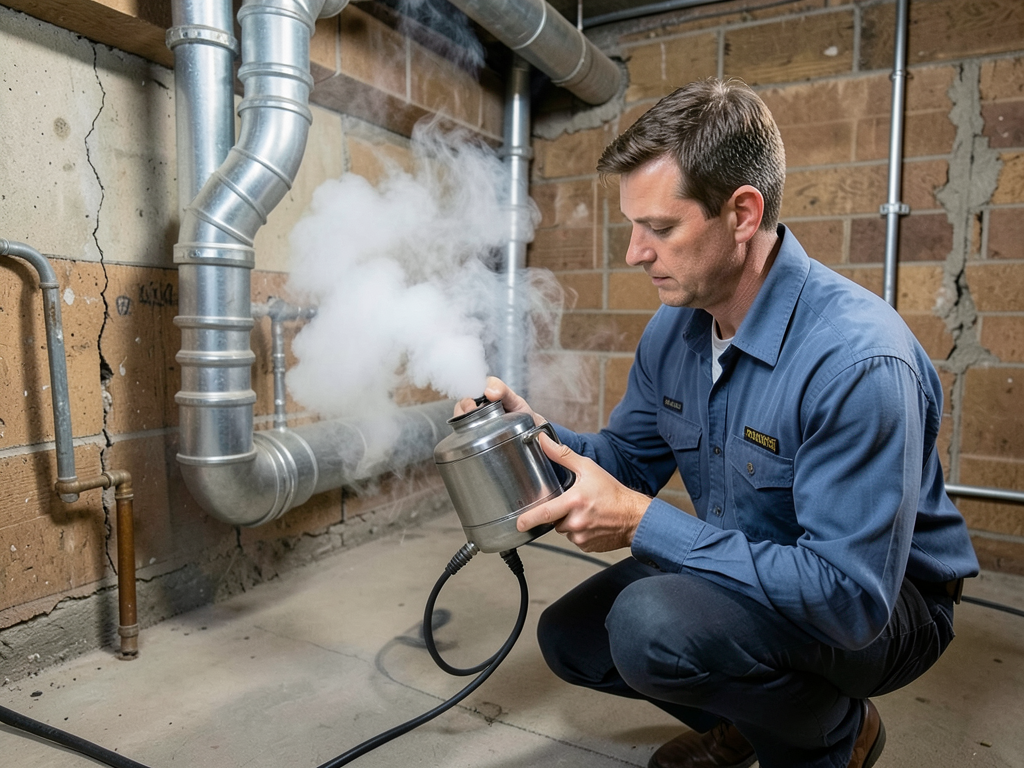
Image: Technician using smoke testing equipment to diagnose sewer gas leaks in a Washington DC basement. Smoke testing reveals hidden cracks in vent stacks and sewer lines that cause basement odors.
DIY Fixes You Can Try Now
Before calling a professional, try these simple fixes that solve most sewer gas problems in under 30 minutes.
Step 1: Prime All Floor Drain Traps
Pour a gallon of water down every floor drain in your basement. This refills the P-trap and creates a new water seal. For drains that smell immediately after pouring water, add a few tablespoons of mineral oil to slow future evaporation.
Step 2: Check Cleanout Plugs
Locate your main sewer cleanout (usually a 3-4 inch pipe with a threaded cap near the front of the basement). Make sure the plug is tight and not missing. A missing cleanout plug is an open invitation for sewer gas.
Step 3: Inspect Toilet Bases
Gently rock each basement toilet. If it moves even slightly, the wax ring has failed. You’ll need to replace it, but this often solves the odor problem immediately.
Step 4: Run Water in Unused Fixtures
Turn on all basement sink faucets and let them run for 2-3 minutes. This fills P-traps in sinks and showers that might have dried out.
If these steps don’t eliminate the smell within 24 hours, you’re dealing with a more serious problem that requires professional diagnosis.
Professional Diagnostic Methods We Use in DC
When DIY fixes fail, professional plumbers use specialized equipment to find hidden sewer gas sources. Here’s what we do that most homeowners can’t:
Smoke Testing
We pump non-toxic smoke into your plumbing system and watch where it escapes. This reveals cracks in vent stacks, broken seals, and disconnected pipes that are invisible to the naked eye. In Eckington’s older homes, we often find smoke escaping through hairline cracks in cast iron pipes.
Sewer Camera Inspection
A waterproof camera snakes through your sewer line, showing us exactly where cracks, root intrusion, or collapsed sections exist. This is especially important in Eckington, where many homes still have original clay sewer pipes that are prone to cracking.
Pressure Testing
We seal your plumbing system and pressurize it with air to detect even the smallest leaks. This test can find problems that smoke testing misses, particularly in vent systems.
Moisture and Gas Detection
Using electronic gas detectors, we measure hydrogen sulfide and methane levels throughout your basement. This helps us pinpoint the exact location of gas leaks and assess the severity of the problem.

Image: Close-up of a cracked cast iron vent stack discovered during a smoke test in a Capitol Hill rowhome. These cracks are common in DC’s older plumbing systems and require immediate repair.
DC’s Unique Infrastructure Challenges
Washington DC’s combined sewer system, managed by DC Water, creates specific challenges for basement plumbing. During heavy rain events, the system can back up, putting extra pressure on your home’s plumbing and potentially forcing gas through even small cracks.
Eckington’s location near the Metropolitan Branch Trail means many homes sit on soil that’s been disturbed by past construction. This settling can shift sewer pipes over time, creating the exact conditions that allow gas to escape.
The District of Columbia Plumbing Code (Section 312.8) requires proper venting for all plumbing fixtures, but many older homes were grandfathered in before these standards existed. This means your 1920s rowhome might be operating with plumbing that wouldn’t pass modern inspection. District of Columbia Plumbing Code.
DC Water recommends installing backwater valves in homes prone to sewer backups, but these don’t address the smaller cracks that let gas escape. That’s why professional diagnosis is often necessary even when you don’t have a visible backup. Safely Installing New Gas Lines for Your DC Kitchen Remodel.
When to Call a Professional
DIY fixes work for about 70% of sewer gas problems. But certain situations require immediate professional attention:
- The smell persists after trying all DIY solutions
- You notice water stains or moisture around pipes
- Your neighbors are experiencing similar issues (indicating a main line problem)
- You have frequent drain clogs accompanied by odors
- You’re planning to sell your home and need documentation of repairs
Professional repair costs vary based on the problem:
- Dried P-traps: $75-150 (DIY is free)
- Cracked vent stack repair: $300-800
- Ejector pump replacement: $600-1,500
- Sewer line repair: $1,500-4,000
Call (771) 223-8111 today to schedule your inspection. We offer same-day service throughout Eckington and can usually diagnose the problem within an hour of arrival.
Preventing Future Sewer Gas Problems
Once you’ve solved the immediate problem, take these steps to prevent future occurrences:
Monthly Maintenance
Once a month, pour a quart of water down each floor drain and run water in unused sinks for 30 seconds. This simple habit prevents P-traps from drying out.
Annual Inspection
Have a professional inspect your plumbing system annually, especially if your home is over 50 years old. Early detection of small problems prevents major repairs later.
Humidity Control
Use a dehumidifier in your basement during summer months. Eckington’s humid climate accelerates pipe corrosion and can worsen existing leaks.
Upgrade Considerations
If your home still has original cast iron or clay pipes, consider proactive replacement with modern PVC. While expensive upfront, this prevents the recurring problems that plague older plumbing systems.
Local Resources and Support
DC Water offers a Home Protection Program that provides financial assistance for certain sewer line repairs. Check their website for eligibility requirements if you’re dealing with a major sewer line issue.
The District’s Department of Consumer and Regulatory Affairs (DCRA) maintains records of plumbing permits and inspections. If you’re buying an Eckington home, review these records to understand the age and condition of the plumbing system.
For emergency situations after hours, DC Water operates a 24/7 emergency line at (202) 612-3400. They can help determine if the problem is on your property or in the main sewer line. Emergency Sump Pump Failure.
Image: Before and after comparison showing a repaired basement toilet with a new wax ring installation. Proper sealing prevents sewer gas from entering living spaces in older DC homes.
Frequently Asked Questions
Can sewer gas make me sick?
Yes. Hydrogen sulfide can cause headaches, dizziness, nausea, and eye irritation. At high concentrations, it can cause unconsciousness or death. Methane is flammable and can create explosion hazards in enclosed spaces.
How long does it take to fix a sewer gas leak?
Simple fixes like refilling P-traps take minutes. More complex repairs like vent stack replacement typically take 2-4 hours. Full sewer line repairs may require a day or more depending on the extent of damage.
Will my homeowner’s insurance cover sewer gas repairs?
Most policies cover sudden, accidental damage but not gradual deterioration. If the problem stems from aging pipes, you’ll likely pay out of pocket. However, if it’s caused by a specific event like a tree root breaking a pipe, insurance might cover it.
Why does the smell come and go?
Sewer gas odors often fluctuate with temperature and humidity changes. Cold weather can cause pipes to contract and open small gaps. High humidity can make odors more noticeable. Wind direction can also affect how quickly gas dissipates through roof vents.
Should I be worried about mold if I have sewer gas?
Sewer gas itself doesn’t cause mold, but the moisture that often accompanies plumbing leaks can. If you notice both odors and visible moisture or mold growth, you likely have a more serious moisture problem that needs immediate attention.
Don’t let that sewer smell linger another day. Call (771) 223-8111 now for fast, professional service throughout Eckington and the greater Washington DC area. Our experienced technicians will find the source of your problem and fix it right the first time.
Remember: that odor isn’t just unpleasant—it’s your home telling you something’s wrong. Listen to it before a small problem becomes a major repair.
Pick up the phone and call (771) 223-8111 before the next storm hits. We’re here to help you breathe easy again.
{
“@context”: “https://schema.org”,
“@type”: “BlogPosting”,
“headline”: “Why Your Eckington Basement Smells Like Sewage Even Without a Backup”,
“description”: “That sewer smell in your Eckington basement? Find out the 5 hidden causes, when it’s dangerous, and how to fix it fast. Serving DC’s Eckington neighborhood.”,
“wordCount”: 1863,
“datePublished”: “2026-03-25T11:53:00.000Z”,
“dateModified”: “2026-03-25T11:53:00.000Z”,
“inLanguage”: “en-US”,
“mainEntityOfPage”: {
“@type”: “WebPage”,
“@id”: “https://crestlineplumbingwashingtondc.com”
},
“publisher”: {
“@type”: “LocalBusiness”,
“name”: “Crestline Plumbing Washington DC”,
“url”: “https://crestlineplumbingwashingtondc.com”
},
“author”: {
“@type”: “Organization”,
“name”: “Crestline Plumbing Washington DC”,
“url”: “https://crestlineplumbingwashingtondc.com”
},
“image”: {
“@type”: “ImageObject”,
“url”: “https://crestlineplumbingwashingtondc.com/wp-content/uploads/2026/03/why-your-eckington-basement-smells-like-sewage-eve-1.png”
}
}
{
“@context”: “https://schema.org”,
“@type”: “Plumber”,
“name”: “Crestline Plumbing Washington DC”,
“url”: “https://crestlineplumbingwashingtondc.com”,
“address”: {
“@type”: “PostalAddress”,
“addressLocality”: “Washington DC”
},
“areaServed”: {
“@type”: “City”,
“name”: “Washington DC”
}
}
{
“@context”: “https://schema.org”,
“@type”: “FAQPage”,
“mainEntity”: [
{
“@type”: “Question”,
“name”: “Immediate Safety: Is Sewer Gas Dangerous?”,
“acceptedAnswer”: {
“@type”: “Answer”,
“text”: “Yes. Sewer gas contains methane, hydrogen sulfide, and ammonia—all potentially harmful in enclosed spaces. Hydrogen sulfide smells like rotten eggs at low concentrations but can paralyze your sense of smell at higher levels, making you think the danger has passed when it’s actually getting worse.”
}
},
{
“@type”: “Question”,
“name”: “Can sewer gas make me sick?”,
“acceptedAnswer”: {
“@type”: “Answer”,
“text”: “Yes. Hydrogen sulfide can cause headaches, dizziness, nausea, and eye irritation. At high concentrations, it can cause unconsciousness or death. Methane is flammable and can create explosion hazards in enclosed spaces.”
}
},
{
“@type”: “Question”,
“name”: “How long does it take to fix a sewer gas leak?”,
“acceptedAnswer”: {
“@type”: “Answer”,
“text”: “Simple fixes like refilling P-traps take minutes. More complex repairs like vent stack replacement typically take 2-4 hours. Full sewer line repairs may require a day or more depending on the extent of damage.”
}
},
{
“@type”: “Question”,
“name”: “Will my homeowner’s insurance cover sewer gas repairs?”,
“acceptedAnswer”: {
“@type”: “Answer”,
“text”: “Most policies cover sudden, accidental damage but not gradual deterioration. If the problem stems from aging pipes, you’ll likely pay out of pocket. However, if it’s caused by a specific event like a tree root breaking a pipe, insurance might cover it.”
}
},
{
“@type”: “Question”,
“name”: “Why does the smell come and go?”,
“acceptedAnswer”: {
“@type”: “Answer”,
“text”: “Sewer gas odors often fluctuate with temperature and humidity changes. Cold weather can cause pipes to contract and open small gaps. High humidity can make odors more noticeable. Wind direction can also affect how quickly gas dissipates through roof vents.”
}
},
{
“@type”: “Question”,
“name”: “Should I be worried about mold if I have sewer gas?”,
“acceptedAnswer”: {
“@type”: “Answer”,
“text”: “Sewer gas itself doesn’t cause mold, but the moisture that often accompanies plumbing leaks can. If you notice both odors and visible moisture or mold growth, you likely have a more serious moisture problem that needs immediate attention.”
}
}
]
}
{
“@context”: “https://schema.org”,
“@type”: “BreadcrumbList”,
“itemListElement”: [
{
“@type”: “ListItem”,
“position”: 1,
“name”: “Home”,
“item”: “https://crestlineplumbingwashingtondc.com”
},
{
“@type”: “ListItem”,
“position”: 2,
“name”: “Blog”,
“item”: “https://crestlineplumbingwashingtondc.com/blog”
},
{
“@type”: “ListItem”,
“position”: 3,
“name”: “Why Your Eckington Basement Smells Like Sewage Even Without a Backup”
}
]
}
{
“@context”: “https://schema.org”,
“@type”: “Service”,
“serviceType”: “Plumbing”,
“provider”: {
“@type”: “LocalBusiness”,
“name”: “Crestline Plumbing Washington DC”,
“url”: “https://crestlineplumbingwashingtondc.com”
},
“areaServed”: {
“@type”: “City”,
“name”: “Washington DC”
},
“description”: “That sewer smell in your Eckington basement? Find out the 5 hidden causes, when it’s dangerous, and how to fix it fast. Serving DC’s Eckington neighborhood.”
}