
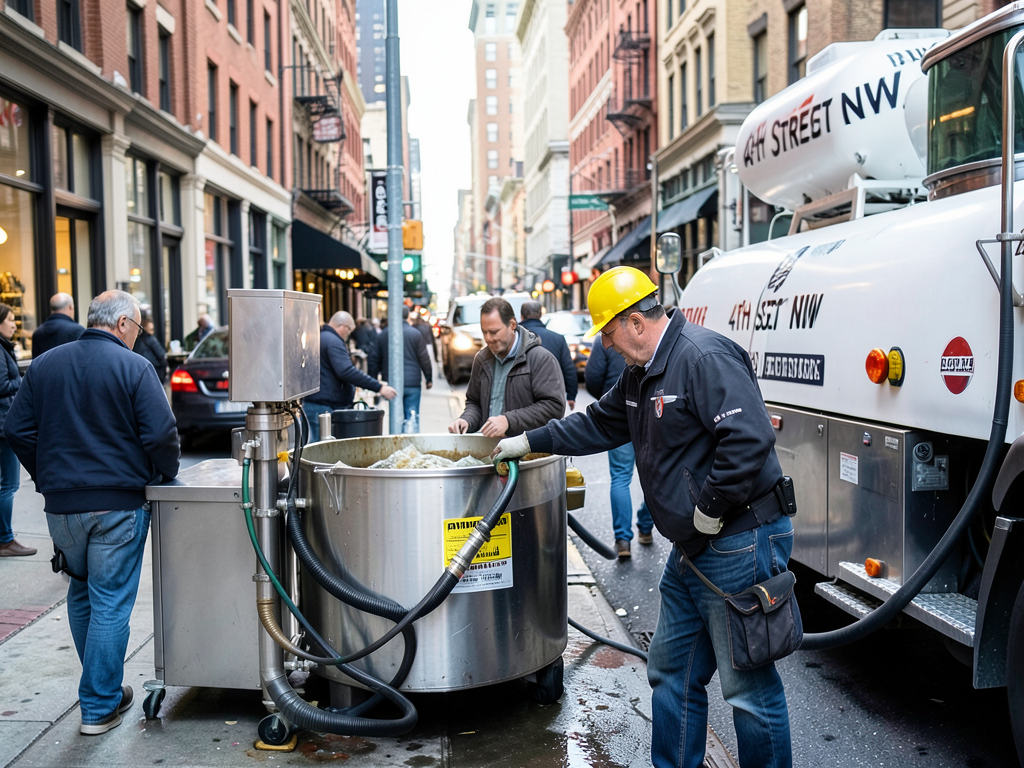
Managing Grease Trap Maintenance for Your Busy Restaurant on 14th Street NW
Running a restaurant on 14th Street NW means dealing with high kitchen volumes, strict DC Water regulations, and the constant risk of grease trap backups. A clogged interceptor can shut down your kitchen, trigger health department fines, and create hazardous conditions for your staff. This guide covers everything you need to know about grease trap cleaning schedules, compliance requirements, and emergency services specific to DC’s restaurant corridor. DC Water FOG Abatement Program.
DC Water’s Fats, Oils, and Grease (FOG) Abatement Program requires commercial kitchens to maintain grease interceptors according to District of Columbia Municipal Regulations (DCMR) Title 21. Violations can result in fines starting at $500 per incident and mandatory shutdowns until compliance is restored. For restaurants on 14th Street, where foot traffic and food service volume are high, staying ahead of maintenance is critical for both operations and legal compliance. DC Department of Energy and Environment.
Understanding DC’s FOG Regulations for 14th Street Restaurants
DC Water mandates that all food service establishments install and maintain grease interceptors based on kitchen size and cooking volume. The regulations specify that interceptors must be cleaned when grease accumulation reaches 25% of the tank’s working volume. For a typical 1,000-gallon outdoor interceptor, this means pumping when approximately 250 gallons of grease and solids have accumulated. Emergency Water Shut-Off Service.
Restaurants on 14th Street face unique challenges due to the area’s combined sewer system, which can cause backups during heavy rainfall. The DC Department of Energy and Environment (DOEE) requires quarterly inspections for establishments in high-risk zones. Your maintenance log must document every cleaning, including the date, service provider, volume removed, and disposal manifest number.
Interior vs. Exterior Grease Interceptors: What 14th Street Restaurants Need
Most 14th Street establishments use exterior underground interceptors because interior units cannot handle the volume from busy kitchens. Exterior interceptors range from 1,000 to 3,000 gallons and require vacuum truck access. Interior grease traps, typically 50-100 gallons, work for low-volume operations but clog quickly under restaurant conditions.
The key difference lies in maintenance frequency. Interior traps need cleaning every 1-2 weeks, while exterior interceptors can go 1-3 months depending on kitchen output. DC Water requires that all exterior units have proper manhole access and be located at least 10 feet from any building foundation to prevent structural damage.
Warning Signs Your Grease Trap Needs Immediate Service
Slow draining sinks throughout the kitchen indicate your interceptor is nearing capacity. You’ll notice water pooling in floor drains and sinks taking 2-3 times longer to empty. Foul odors emanating from floor drains suggest grease is decomposing inside the trap, creating hydrogen sulfide gas.
Gurgling sounds from nearby drains when other fixtures are used signal air trapped by grease blockage. If you see grease floating in sink water or notice water backing up into adjacent sinks when you run the dishwasher, your interceptor has failed and requires emergency pumping before health inspectors arrive. Who to Call When You Need an Emergency Plumber in Georgetown Right Away.
Our Professional Cleaning Process for DC Restaurants
We follow a systematic approach that ensures complete cleaning and proper documentation for DC Water compliance. First, we measure the grease layer using a sludge judge to determine if cleaning is needed. If the grease exceeds 25% of tank depth, we proceed with the full service.
Our technicians remove all contents using a high-capacity vacuum truck, then scrape the tank walls and baffles to eliminate buildup. We perform hydro-jetting on inlet and outlet lines to clear any FOG accumulation in the pipes. Finally, we deodorize the system and provide you with a detailed service report including manifest documentation for your records.
Recommended Cleaning Schedules for 14th Street Restaurants
Based on kitchen volume and menu type, here’s our maintenance schedule recommendation for 14th Street establishments. High-volume restaurants with deep fryers and grill stations need monthly cleaning. Medium-volume establishments can typically go 60 days between services. Low-volume cafes might extend to 90 days, but never beyond 120 days per DC regulations.
Menu composition affects frequency significantly. Restaurants serving fried foods, sauces, and butter-heavy dishes accumulate grease faster than those focused on salads and sandwiches. We recommend quarterly inspections even if you’re on a longer cleaning cycle to catch developing issues before they cause backups.
Emergency 24/7 Grease Trap Pumping for DC Restaurants
When your grease trap fails during dinner service, every minute costs you money and reputation. Our emergency response team arrives within 60 minutes anywhere in the DC metro area, including 14th Street, Adams Morgan, and Georgetown. We carry all necessary permits and manifests to handle your waste according to DC Water requirements. Emergency Sump Pump Failure.
Emergency service includes immediate pumping to restore kitchen operations, followed by a full diagnostic to identify the cause of failure. We check inlet and outlet lines, inspect baffles, and test for proper flow. If we find damaged components, we can replace them on-site to prevent immediate recurrence.
Documenting Compliance for DC Health Inspections
DC health inspectors require maintenance logs showing cleaning dates, service provider information, and disposal manifests. Your log should include the grease trap ID number, tank capacity, cleaning frequency, and any violations or repairs. We provide digital copies of all service records that you can access anytime through our customer portal.
Keep manifests for at least three years as required by DC Water. Each manifest documents the volume of waste removed, disposal facility information, and our license number. These records prove you’re maintaining your system properly and can prevent fines during surprise inspections.
Preventing Future Grease Trap Problems
Employee training prevents most grease trap issues. Kitchen staff should scrape plates thoroughly before washing, use sink strainers, and never pour fryer oil down drains. Establish a protocol for reporting slow drains or unusual odors immediately.
Install grease sensors that alert you when accumulation reaches 20% capacity, giving you time to schedule cleaning before reaching the critical 25% threshold. Consider enzyme treatments that break down FOG between cleanings, but understand these are supplements, not replacements for professional pumping.
Service Areas in the District
We serve all of Washington DC, with particular focus on high-volume restaurant corridors. Our 14th Street NW service area includes the U Street Corridor (20001), Logan Circle (20005), and Downtown DC (20004). We also cover Adams Morgan, Dupont Circle, Georgetown, and Capitol Hill.
Our technicians are familiar with the specific challenges of each neighborhood. 14th Street restaurants deal with combined sewer issues, while Georgetown establishments face historic building constraints. We maintain equipment and permits specific to each DC quadrant to ensure rapid response anywhere in the city.
Cost Factors for Grease Trap Services
Service costs depend on trap size, cleaning frequency, and location. A 1,000-gallon exterior interceptor typically costs $400-600 for standard cleaning. Emergency services during off-hours add 50-75% to base rates. Restaurants requiring quarterly service often qualify for discounted rates compared to one-time customers.
Additional costs may include line jetting if pipes are clogged, baffle replacement if damaged, or emergency response fees for after-hours service. We provide detailed estimates before any work begins and can help you budget for annual maintenance based on your specific kitchen operations.
Why Choose Professional Service Over DIY
Professional service ensures proper waste disposal according to DC Water regulations. We hold all necessary permits for FOG transportation and disposal, and our manifests provide legal documentation of compliance. DIY pumping risks improper disposal, incomplete cleaning, and potential fines from DC Water inspectors.
Our equipment reaches all areas of your interceptor, including baffles and walls where grease accumulates. We test flow rates, inspect for damage, and provide documentation that satisfies health department requirements. Most importantly, we stand behind our work with a satisfaction guarantee and will return if you experience issues within 30 days.
Frequently Asked Questions
How often should I clean my restaurant’s grease trap?
Cleaning frequency depends on your kitchen volume and menu. High-volume restaurants need monthly service, while medium-volume establishments can go 60 days. Never exceed 120 days between cleanings as required by DC Water regulations.
What happens if I don’t maintain my grease trap properly?
Failure to maintain your grease trap can result in health department fines starting at $500, kitchen shutdowns, sewage backups, and environmental violations. DC Water can also require expensive repairs if neglect damages your system or municipal infrastructure.
Can I clean my grease trap myself to save money?
DIY cleaning is not recommended because you need proper permits for waste disposal, specialized equipment for complete cleaning, and documentation for health inspections. Professional service ensures compliance and prevents costly mistakes that could shut down your restaurant.
Ready to Protect Your Restaurant’s Operations?
Don’t wait for a grease trap backup to disrupt your busiest dinner service. Call (771) 223-8111 today to schedule your inspection or emergency service. We’ll help you stay compliant with DC Water regulations while keeping your kitchen running smoothly. Our team understands the unique challenges of 14th Street restaurants and provides fast, professional service when you need it most.
Pick up the phone and call (771) 223-8111 before the next rush hits. Whether you need routine maintenance or emergency pumping, we’re standing by to serve your restaurant on 14th Street NW and throughout the DC metro area.
{
“@context”: “https://schema.org”,
“@type”: “BlogPosting”,
“headline”: “Managing Grease Trap Maintenance for Your Busy Restaurant on 14th Street NW”,
“description”: “Stay compliant with DC Water regulations. Learn grease trap cleaning schedules, FOG disposal rules, and emergency pumping services for 14th Street restaurants.”,
“wordCount”: 1536,
“datePublished”: “2026-03-16T07:42:00.000Z”,
“dateModified”: “2026-03-16T07:42:00.000Z”,
“inLanguage”: “en-US”,
“mainEntityOfPage”: {
“@type”: “WebPage”,
“@id”: “https://crestlineplumbingwashingtondc.com”
},
“publisher”: {
“@type”: “LocalBusiness”,
“name”: “Crestline Plumbing Washington DC”,
“url”: “https://crestlineplumbingwashingtondc.com”
},
“author”: {
“@type”: “Organization”,
“name”: “Crestline Plumbing Washington DC”,
“url”: “https://crestlineplumbingwashingtondc.com”
},
“image”: {
“@type”: “ImageObject”,
“url”: “https://crestlineplumbingwashingtondc.com/wp-content/uploads/2026/03/managing-grease-trap-maintenance-for-your-busy-res-1.png”
}
}
{
“@context”: “https://schema.org”,
“@type”: “Plumber”,
“name”: “Crestline Plumbing Washington DC”,
“url”: “https://crestlineplumbingwashingtondc.com”,
“address”: {
“@type”: “PostalAddress”,
“addressLocality”: “Washington DC”
},
“areaServed”: {
“@type”: “City”,
“name”: “Washington DC”
}
}
{
“@context”: “https://schema.org”,
“@type”: “FAQPage”,
“mainEntity”: [
{
“@type”: “Question”,
“name”: “How often should I clean my restaurant’s grease trap?”,
“acceptedAnswer”: {
“@type”: “Answer”,
“text”: “Cleaning frequency depends on your kitchen volume and menu. High-volume restaurants need monthly service, while medium-volume establishments can go 60 days. Never exceed 120 days between cleanings as required by DC Water regulations.”
}
},
{
“@type”: “Question”,
“name”: “What happens if I don’t maintain my grease trap properly?”,
“acceptedAnswer”: {
“@type”: “Answer”,
“text”: “Failure to maintain your grease trap can result in health department fines starting at $500, kitchen shutdowns, sewage backups, and environmental violations. DC Water can also require expensive repairs if neglect damages your system or municipal infrastructure.”
}
},
{
“@type”: “Question”,
“name”: “Can I clean my grease trap myself to save money?”,
“acceptedAnswer”: {
“@type”: “Answer”,
“text”: “DIY cleaning is not recommended because you need proper permits for waste disposal, specialized equipment for complete cleaning, and documentation for health inspections. Professional service ensures compliance and prevents costly mistakes that could shut down your restaurant.”
}
},
{
“@type”: “Question”,
“name”: “Ready to Protect Your Restaurant’s Operations?”,
“acceptedAnswer”: {
“@type”: “Answer”,
“text”: “Don’t wait for a grease trap backup to disrupt your busiest dinner service. Call (771) 223-8111 today to schedule your inspection or emergency service. We’ll help you stay compliant with DC Water regulations while keeping your kitchen running smoothly. Our team understands the unique challenges of 14th Street restaurants and provides fast, professional service when you need it most.”
}
}
]
}
{
“@context”: “https://schema.org”,
“@type”: “BreadcrumbList”,
“itemListElement”: [
{
“@type”: “ListItem”,
“position”: 1,
“name”: “Home”,
“item”: “https://crestlineplumbingwashingtondc.com”
},
{
“@type”: “ListItem”,
“position”: 2,
“name”: “Blog”,
“item”: “https://crestlineplumbingwashingtondc.com/blog”
},
{
“@type”: “ListItem”,
“position”: 3,
“name”: “Managing Grease Trap Maintenance for Your Busy Restaurant on 14th Street NW”
}
]
}
{
“@context”: “https://schema.org”,
“@type”: “Service”,
“serviceType”: “Plumbing”,
“provider”: {
“@type”: “LocalBusiness”,
“name”: “Crestline Plumbing Washington DC”,
“url”: “https://crestlineplumbingwashingtondc.com”
},
“areaServed”: {
“@type”: “City”,
“name”: “Washington DC”
},
“description”: “Stay compliant with DC Water regulations. Learn grease trap cleaning schedules, FOG disposal rules, and emergency pumping services for 14th Street restaurants.”
}