
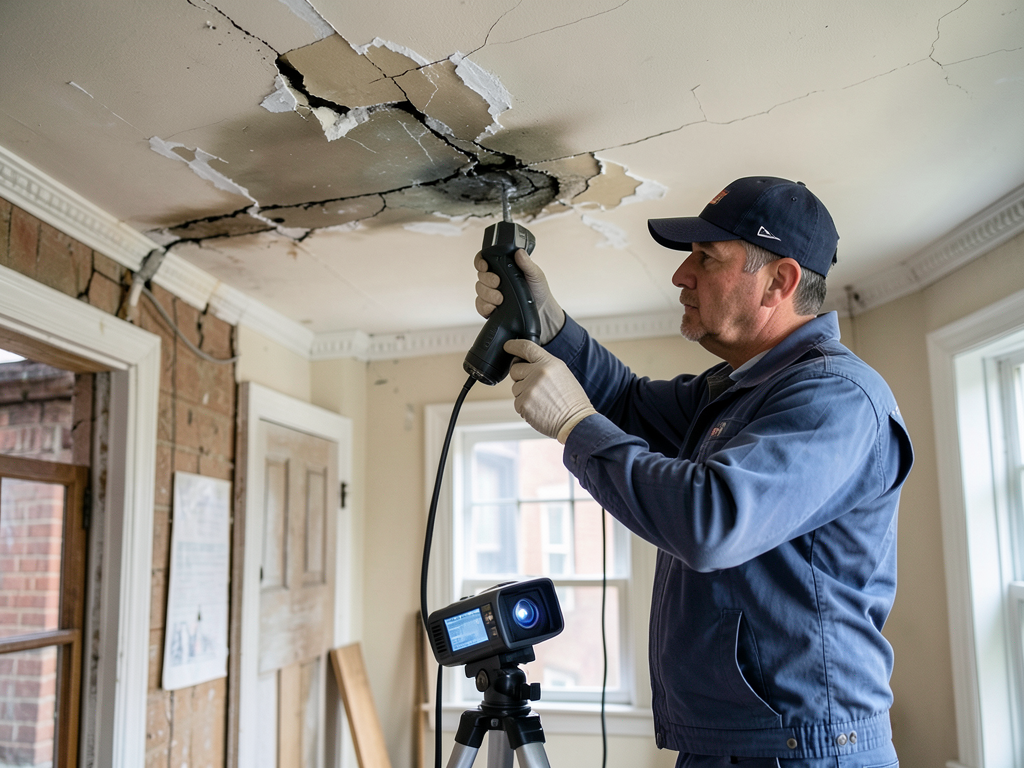
Finding a water stain on your ceiling can be alarming especially when you live in a historic Manor Park home. That brown patch might look like a simple cosmetic issue but it often signals a hidden plumbing problem above. In this article we will walk through the most common causes of ceiling stains in DC homes and show you how to identify the source before it turns into major damage. DC Plumbing Permit Information.
Immediate Steps What to do when you see a wet spot on your ceiling
The first sign of a ceiling stain is often a small discolored area but that can quickly become a sagging wet patch if ignored. Your first priority should be safety. If the ceiling feels soft or you see water dripping turn off the electricity to that room immediately. A wet ceiling near light fixtures creates a serious shock hazard. Emergency Water Shut-Off Service.
Next locate your home’s main water shutoff valve. In Manor Park row houses this is often in the basement near the front of the house. Turning off the water supply can stop active leaks from worsening while you investigate. Do not attempt to poke or break open the stain yourself as this can release trapped water into your living space and cause more damage. Don’t Let Your Basement Flood—Expert Sump Pump Repair and Maintenance in Northwest DC.
Place a bucket under the drip if possible and use towels to contain spreading water. If the stain is actively growing or you hear water running behind the wall call a licensed plumber right away. In DC emergency plumbing calls should be made to professionals who carry thermal imaging cameras and moisture meters to pinpoint the exact source without tearing open walls unnecessarily. Who to Call When You Need an Emergency Plumber in Georgetown Right Away.
The 5 Most Common Causes of Bathroom Leaks in DC Homes
Understanding where leaks originate can help you describe the problem to a plumber and speed up repairs. In Manor Park and other DC neighborhoods these are the five most frequent culprits behind ceiling stains. EPA Mold Guidelines.
1. Failing Toilet Wax Ring
Every toilet sits on a wax ring that seals the connection between the bowl and the waste pipe. Over time this wax can degrade especially in older DC homes with cast iron drains. When the seal fails water escapes every time the toilet is flushed slowly seeping into the floor and ceiling below. The stain often appears directly under the toilet and may have a yellow or brown tint.. Read more about Why a Water Pressure Reducing Valve is Essential for Your Penn Quarter Home.
2. Loose Shower Drain
Shower pans in older homes can separate from the drain assembly. Each time you shower a small amount of water slips past the seal and travels along the underside of the subfloor. This type of leak is intermittent which makes it tricky to diagnose. The stain may grow larger after heavy use and shrink during dry periods.
3. Deteriorating Grout or Caulking
Cracked grout between shower tiles or failed caulking around tub edges allows water to penetrate behind walls. In DC’s humid climate this moisture can travel along wall cavities and drip onto ceilings below. You might notice the stain spreading near the bathroom wall rather than directly beneath plumbing fixtures. Common Plumbing Problems in Historic Capitol Hill Rowhouses (and How We Fix Them).
4. P-Trap Leaks
The curved pipe under your sink or tub (the P-trap) can develop small cracks or loose connections over time. These leaks often go unnoticed because they are slow and hidden inside vanities or behind access panels. Water from a failing P-trap can travel along pipe threads and emerge as a ceiling stain several feet away from the actual leak.
5. Aging Copper or Galvanized Supply Lines
Many historic DC homes still have original galvanized steel or copper supply lines. Galvanized pipes corrode from the inside out creating pinhole leaks that can spray water into wall cavities. Copper can develop green corrosion spots that eventually fail. These supply line leaks often run continuously creating larger stains than drain-related issues.
DIY Diagnosis How to pinpoint the source of the stain
Before calling a plumber you can perform a few simple tests to help identify the leak source. These steps give your plumber valuable information and may save diagnostic time.
Start with the toilet dye test. Add a few drops of food coloring to the toilet tank and do not flush for 30 minutes. If colored water appears on the floor or ceiling below the wax ring is leaking. This test is safe and inexpensive.
Next try the shower splash test. With the shower drain plugged let water run for five minutes. Then check the ceiling below for new moisture. If the stain grows you likely have a drain or pan issue. If nothing changes but the stain is still there the problem may be in the supply lines or grout.
Check under sinks and vanities for signs of corrosion mineral deposits or dampness on pipes. Use a flashlight to inspect the back of cabinets where P-traps are located. Even small amounts of moisture here can indicate a slow leak traveling upward and dripping onto the ceiling.
For persistent mystery stains consider hiring a plumber with thermal imaging equipment. These cameras detect temperature differences caused by water presence even inside walls. This non-invasive diagnostic step can save you from unnecessary demolition and pinpoint the exact repair area.
The Real Cost of Ignoring a Ceiling Water Stain
What starts as a small brown spot can escalate into thousands of dollars in damage if left untreated. In DC’s humid climate a persistent leak creates ideal conditions for mold growth within 24 to 48 hours.
Stachybotrys chartarum commonly known as black mold thrives in dark damp spaces like ceiling cavities. Professional mold remediation in the DMV area typically costs between $2,000 and $6,000 depending on the affected area size. The EPA recommends hiring certified mold professionals for any contamination larger than 10 square feet.
Beyond mold structural damage is another concern. Water weakens ceiling joists and drywall causing sagging that can lead to collapse. Replacing a section of ceiling in a DC rowhouse often requires permits from the Department of Buildings and can cost $1,500 to $3,000 including labor and materials.
Insurance claims for water damage average $11,000 nationally but can exceed $20,000 in cases involving mold and structural repairs. Most DC homeowner policies require you to mitigate damage quickly or risk claim denial. This means documenting the leak stopping further water intrusion and beginning professional repairs promptly.
DC Plumbing Regulations and Repair Expectations
Washington DC has specific plumbing regulations that affect how ceiling leak repairs are handled. The DC Plumbing Code based on the International Plumbing Code requires permits for most plumbing modifications including replacing supply lines or drain assemblies that require wall access.
According to the DC Department of Buildings (DOB) R104.2 permits are required for repairs that alter the piping system or involve cutting into walls to access plumbing. This means a plumber must file for a permit before opening your ceiling to fix a leak. The permit process ensures work meets code and can be inspected for safety.
DC Water mandates that all plumbing work disturbing the public sewer connection must use licensed contractors. This protects the city’s combined sewer system from cross-contamination. When a ceiling leak repair involves the main drain stack a master plumber must handle the work.
Homeowners should expect professional plumbers to provide a written scope of work before beginning repairs. This should include the diagnostic findings proposed repair method permit requirements and estimated timeline. In Manor Park’s historic district additional preservation guidelines may apply if the work affects original architectural features.
Prevention Tips for Manor Park Homeowners
Preventing ceiling leaks starts with regular maintenance of your bathroom plumbing. Inspect toilet seals annually for signs of wear or movement. Replace wax rings every 5 to 7 years as preventive maintenance especially in older homes.
Check shower grout and caulking twice yearly. Small cracks can be sealed with silicone caulk before they allow water intrusion. Pay special attention to corners and transitions where different materials meet.
Install water alarms in areas prone to leaks such as under vanities or near water heaters. These inexpensive devices sound an alert when they detect moisture helping you catch slow leaks before they cause ceiling damage.
Consider whole-house water monitoring systems that track usage patterns and alert you to unusual flow that might indicate a hidden leak. These smart devices can prevent catastrophic damage by shutting off water automatically when leaks are detected.
Finally know your home’s plumbing age. If your Manor Park house still has original galvanized pipes from the 1940s or earlier budget for replacement before they fail. Modern PEX or copper supply lines offer better reliability and water quality.
When to Call a Professional
Not every ceiling stain requires immediate professional help but certain signs indicate you need expert assistance right away. If the stain is actively growing feels soft to the touch or has a strong musty odor call a licensed plumber immediately.
Professional plumbers use moisture meters to measure water content in materials thermal imaging to see behind walls and acoustic listening devices to hear water movement inside pipes. These tools allow them to diagnose problems without destructive testing.
Choose a plumber who carries both general liability and workers compensation insurance. In DC ask to see their Master Plumber license which is required for most plumbing repairs. A reputable contractor will provide a written estimate and explain the permit process before beginning work.
Remember that the cost of professional diagnosis is often less than the damage from delayed repairs. A $200 to $400 diagnostic visit can prevent $5,000 to $10,000 in ceiling replacement and mold remediation costs.
Frequently Asked Questions
How can I tell if my ceiling stain is from a plumbing leak or roof issue?
Plumbing leaks typically appear as yellowish brown spots that grow after using water fixtures. Roof leaks often show as darker stains with mold growth and may appear after rain. Check if the stain worsens when flushing toilets or running showers to determine if it is plumbing related.
Is a small ceiling stain dangerous?
Even small stains can indicate active leaks that promote mold growth and structural damage. The stain size does not always reflect the severity of the underlying problem. A tiny spot might mean a high-pressure spray leak while a large stain could be a slow drip that has been active for months.
How long does it take to repair a ceiling leak?
Repair time depends on the source and accessibility. Simple fixes like replacing a wax ring take 1 to 2 hours. Complex repairs involving wall demolition and pipe replacement may require 2 to 3 days including drying time and patching. Your plumber should provide a specific timeline after diagnosis.
Will my homeowner’s insurance cover ceiling leak repairs?
Most policies cover sudden and accidental water damage but not damage from neglected maintenance. If the leak results from old pipes you failed to maintain coverage may be denied. Document the damage with photos and contact your insurance company promptly after discovering the problem.
What should I do if I see mold with my ceiling stain?
Stop disturbing the area and seal it off from the rest of your home. Mold spores can spread through air movement. Contact both a plumber to fix the leak source and a certified mold remediation specialist to handle the contamination safely. Do not attempt mold removal yourself if the area exceeds 10 square feet. Safely Installing New Gas Lines for Your DC Kitchen Remodel.
Call (771) 223-8111 today to schedule your inspection. Don’t let that ceiling stain turn into a major repair. Our licensed DC plumbers use advanced diagnostic tools to find and fix the source fast so you can stop worrying about water damage.
{
“@context”: “https://schema.org”,
“@type”: “BlogPosting”,
“headline”: “The Most Common Causes of Mystery Water Stains on Your Manor Park Ceilings”,
“description”: “Discover the top causes of ceiling water stains in Manor Park homes and how to identify plumbing leaks before major damage occurs. Call (771) 223-8111 for help.”,
“wordCount”: 1983,
“datePublished”: “2026-04-11T12:44:00.000Z”,
“dateModified”: “2026-04-11T12:44:00.000Z”,
“inLanguage”: “en-US”,
“mainEntityOfPage”: {
“@type”: “WebPage”,
“@id”: “https://crestlineplumbingwashingtondc.com”
},
“publisher”: {
“@type”: “LocalBusiness”,
“name”: “Crestline Plumbing Washington DC”,
“url”: “https://crestlineplumbingwashingtondc.com”
},
“author”: {
“@type”: “Organization”,
“name”: “Crestline Plumbing Washington DC”,
“url”: “https://crestlineplumbingwashingtondc.com”
},
“image”: {
“@type”: “ImageObject”,
“url”: “https://crestlineplumbingwashingtondc.com/wp-content/uploads/2026/03/the-most-common-causes-of-mystery-water-stains-on-1.png”
}
}
{
“@context”: “https://schema.org”,
“@type”: “Plumber”,
“name”: “Crestline Plumbing Washington DC”,
“url”: “https://crestlineplumbingwashingtondc.com”,
“address”: {
“@type”: “PostalAddress”,
“addressLocality”: “Washington DC”
},
“areaServed”: {
“@type”: “City”,
“name”: “Washington DC”
}
}
{
“@context”: “https://schema.org”,
“@type”: “FAQPage”,
“mainEntity”: [
{
“@type”: “Question”,
“name”: “How can I tell if my ceiling stain is from a plumbing leak or roof issue?”,
“acceptedAnswer”: {
“@type”: “Answer”,
“text”: “Plumbing leaks typically appear as yellowish brown spots that grow after using water fixtures. Roof leaks often show as darker stains with mold growth and may appear after rain. Check if the stain worsens when flushing toilets or running showers to determine if it is plumbing related.”
}
},
{
“@type”: “Question”,
“name”: “Is a small ceiling stain dangerous?”,
“acceptedAnswer”: {
“@type”: “Answer”,
“text”: “Even small stains can indicate active leaks that promote mold growth and structural damage. The stain size does not always reflect the severity of the underlying problem. A tiny spot might mean a high-pressure spray leak while a large stain could be a slow drip that has been active for months.”
}
},
{
“@type”: “Question”,
“name”: “How long does it take to repair a ceiling leak?”,
“acceptedAnswer”: {
“@type”: “Answer”,
“text”: “Repair time depends on the source and accessibility. Simple fixes like replacing a wax ring take 1 to 2 hours. Complex repairs involving wall demolition and pipe replacement may require 2 to 3 days including drying time and patching. Your plumber should provide a specific timeline after diagnosis.”
}
},
{
“@type”: “Question”,
“name”: “Will my homeowner’s insurance cover ceiling leak repairs?”,
“acceptedAnswer”: {
“@type”: “Answer”,
“text”: “Most policies cover sudden and accidental water damage but not damage from neglected maintenance. If the leak results from old pipes you failed to maintain coverage may be denied. Document the damage with photos and contact your insurance company promptly after discovering the problem.”
}
},
{
“@type”: “Question”,
“name”: “What should I do if I see mold with my ceiling stain?”,
“acceptedAnswer”: {
“@type”: “Answer”,
“text”: “Stop disturbing the area and seal it off from the rest of your home. Mold spores can spread through air movement. Contact both a plumber to fix the leak source and a certified mold remediation specialist to handle the contamination safely. Do not attempt mold removal yourself if the area exceeds 10 square feet. Safely Installing New Gas Lines for Your DC Kitchen Remodel.”
}
}
]
}
{
“@context”: “https://schema.org”,
“@type”: “BreadcrumbList”,
“itemListElement”: [
{
“@type”: “ListItem”,
“position”: 1,
“name”: “Home”,
“item”: “https://crestlineplumbingwashingtondc.com”
},
{
“@type”: “ListItem”,
“position”: 2,
“name”: “Blog”,
“item”: “https://crestlineplumbingwashingtondc.com/blog”
},
{
“@type”: “ListItem”,
“position”: 3,
“name”: “The Most Common Causes of Mystery Water Stains on Your Manor Park Ceilings”
}
]
}
{
“@context”: “https://schema.org”,
“@type”: “Service”,
“serviceType”: “Plumbing”,
“provider”: {
“@type”: “LocalBusiness”,
“name”: “Crestline Plumbing Washington DC”,
“url”: “https://crestlineplumbingwashingtondc.com”
},
“areaServed”: {
“@type”: “City”,
“name”: “Washington DC”
},
“description”: “Discover the top causes of ceiling water stains in Manor Park homes and how to identify plumbing leaks before major damage occurs. Call (771) 223-8111 for help.”
}